





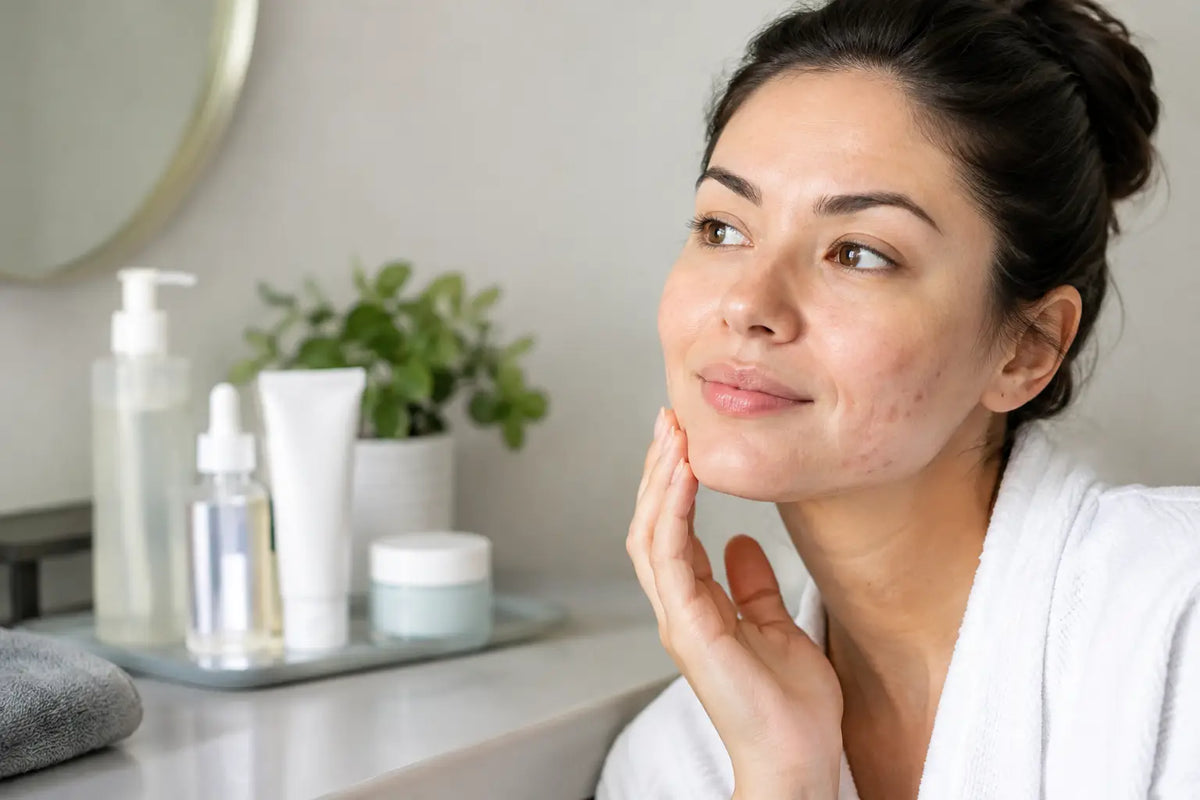
The most useful acne treatment options for adult breakouts usually pair one pore-clearing treatment with a routine you can actually keep using without your skin feeling stripped. The hard part is that many people already have the drawer of half-used bottles, plus the distinct frustration of managing pimples and fine lines at the same time.
Acne is not a hygiene failure or proof that you have been careless with your skin. It is a skin condition shaped by plugged pores, oil, inflammation, and, for many adults, shifts that can make the chin and lower face especially frustrating. A good plan starts by matching treatment to what you see most often, then giving that plan room to work.
What acne treatment options work for clogged pores and breakouts?
For blackheads, whiteheads, and small clogged bumps, salicylic acid is often a sensible place to start. It is oil-soluble, so it works within the pore opening to help loosen the material that can become a clog. Under the FDA over-the-counter monograph, salicylic acid may be used in a 0.5% to 2% range for acne treatment.
Benzoyl peroxide is another over-the-counter option, often used for inflamed pimples. It can be useful, but it may be drying and can bleach fabrics. Some people do well with it; others find that the dryness becomes the whole story, and they stop using it before they can judge whether it helps.
Topical retinoids are commonly used for clogged pores and acne-prone skin. Adapalene is available over the counter, while other retinoids require a prescription. Retinol is a cosmetic ingredient rather than an FDA over-the-counter acne drug active, but it is often included in formulas intended to improve the appearance of texture and fine lines.
The American Academy of Dermatology includes topical retinoids, benzoyl peroxide, and salicylic acid among established acne treatment approaches. The right choice depends on the type of breakout, your history of irritation, and whether you need help beyond what over-the-counter care can reasonably address.
| Approach | Often chosen for | The trade-off to consider |
|---|---|---|
| Salicylic acid | Blackheads, whiteheads, and clogged pores | Can feel drying if paired with too many exfoliating products |
| Benzoyl peroxide | Red, inflamed pimples | Can cause dryness and bleach towels or pillowcases |
| Topical retinoid | Clogged pores and recurring breakouts | Irritation can make it hard to stay consistent |
| Prescription care | Persistent, widespread, or painful acne | Requires an evaluation and follow-up with a dermatologist |
A treatment does not need to do everything to be worthwhile. It needs to address the problem you actually have without creating a second problem you cannot live with.
Can you use salicylic acid and retinol together?
Yes, some people can use salicylic acid and retinol together, but it depends on the formula, the rest of the routine, and how easily your skin becomes irritated. Combining separate strong products without a plan can lead to stinging, flaking, tightness, and the temptation to quit all treatment at once.
A simpler approach is often easier to evaluate. If you add a product, avoid adding several others at the same time. Keep the rest of your routine plain, use a moisturizer that feels comfortable, and pay attention to persistent burning or visible irritation. More exfoliation is not automatically better for acne.
This matters especially for adults who want acne care without ignoring the appearance of uneven texture or fine lines. A routine can be acne-focused and still make room for ingredients formulated for cosmetic concerns. The goal is not to chase every trend or punish your skin into behaving. It is to choose a routine with a clear job.
Why does adult acne feel harder to treat?
Adult acne can feel uniquely unfair because the approach that once dried out a teenage breakout may now leave skin looking rough, uncomfortable, or more uneven. You may also be dealing with post-acne marks that linger visually after a pimple is gone. Aggressive scrubbing, frequent product switching, and stacking acids can keep the cycle going.
Breakouts around the chin and jaw can also be persistent. Hormonal shifts may play a role, but a pattern alone cannot tell you exactly what is happening or what treatment you need. If breakouts are painful, deep, widespread, leaving marks that concern you, or not responding to over-the-counter treatment, a dermatologist can help sort through options that are not available on the shelf.
Some conditions can resemble acne or occur alongside it. Rosacea, eczema, and other skin conditions need their own evaluation and should not be self-treated as ordinary breakouts. If you are pregnant or breastfeeding, ask a doctor before starting or changing acne treatment.
How do you build a routine without buying more bottles?
Start with the product that addresses your main concern. If clogged pores and blackheads lead the list, a salicylic acid treatment may make the most sense. If inflamed pimples are the main issue, benzoyl peroxide may be worth considering. If you have tried these approaches carefully and still have frequent breakouts, it may be time for professional guidance rather than another random purchase.
Keep cleansing gentle. Use sunscreen during the day because acne itself, irritation, and sun exposure can all make uneven-looking color more noticeable. Then resist the urge to change course every time a new product promises a shortcut. Consistency is not exciting, but it is how you learn whether a routine agrees with your skin.
For a parent choosing acne care for a teenager, the same principle applies: keep the routine understandable and avoid treating every breakout as an emergency. A parent should ask a doctor about products for a child, or about painful, deep, emotionally distressing, or persistent breakouts. Acne can affect confidence, and getting help is reasonable.
What can over-the-counter acne treatment not do?
Over-the-counter treatment can help manage common breakouts and clogged pores, but it cannot diagnose your skin. It cannot tell whether a persistent rash is acne, whether a prescription would be more appropriate, or whether an underlying health concern needs attention.
It also cannot make every acne mark disappear or prevent every future pimple. Anyone promising that is asking you to suspend good judgment. Treatment is about improving the direction of your skin over time and reducing the chaos of a routine that is constantly changing.
There is a practical middle ground between doing nothing and owning every product on the shelf. Choose a treatment with a job you understand, use it as directed, and get medical help when the problem exceeds what over-the-counter care can handle.
For adults who want one twice-daily step rather than a layered routine, XVesuvius® is an FDA over-the-counter acne drug formulated with 2% salicylic acid, along with ingredients including encapsulated retinol and peptides for cosmetic benefits. It is one option for someone who wants to address acne while supporting skin that looks smoother and more even.
Start with the concern that bothers you most, then make your routine small enough to stick with.


Share:
Why Acne Persists When Your Routine Looks Right
Best Serums for Acne Texture That Actually Help