





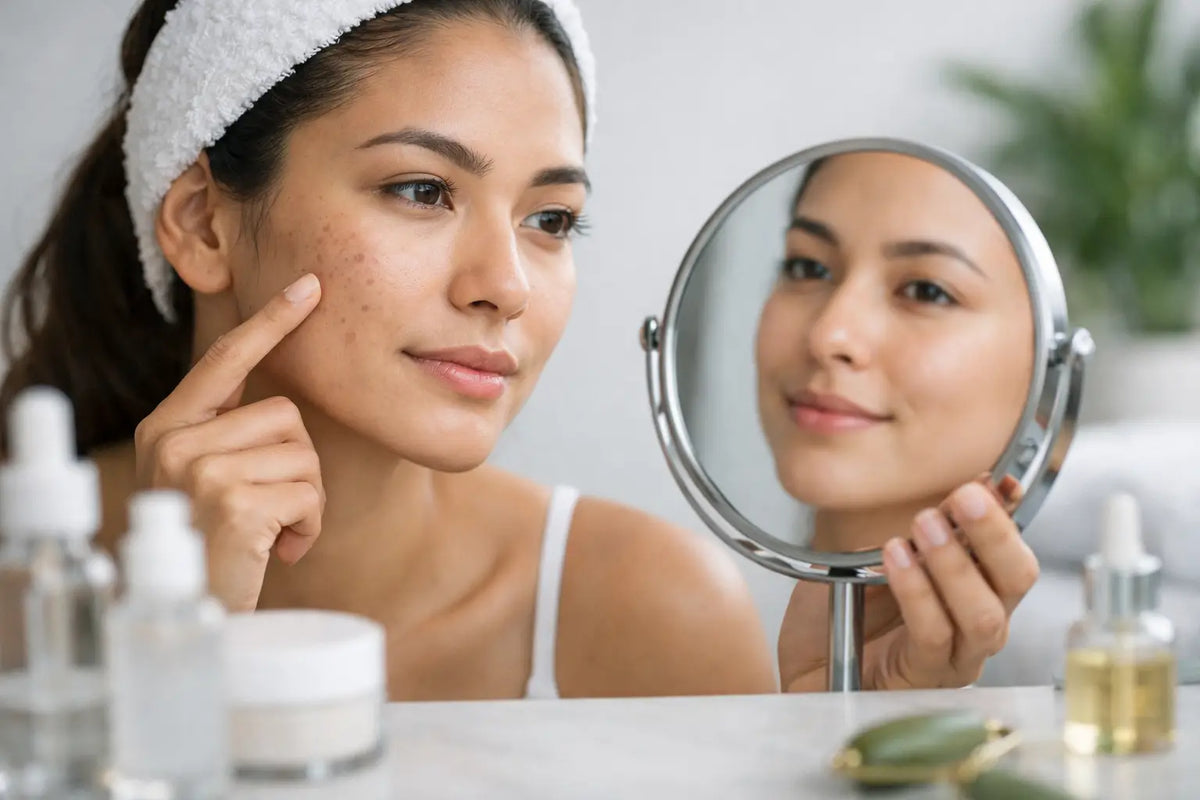
Post-acne marks can fade, but the process is usually slower than people expect. The most useful way to fade post acne marks is to limit new breakouts, avoid irritation that keeps skin looking inflamed, and use sun protection consistently. The goal is not to chase a flawless-looking face by adding more bottles to the counter. It is to give skin a routine you can keep using.
A mark left after a breakout is not always the same thing as a scar. That distinction matters because different visible concerns respond differently to at-home care.
What Helps Fade Post Acne Marks?
Flat red, pink, brown, or gray marks are changes in visible color that can remain after a blemish settles. They may be more noticeable in certain lighting, after exercise, or when skin is dry and irritated. These marks often soften gradually, especially when new breakouts become less frequent and the skin is not repeatedly pushed into redness.
Indented, raised, or uneven areas are different. Those changes in texture may not respond much to a topical routine, even when the routine improves the appearance of tone around them. A dermatologist can help explain options for persistent texture concerns. That is not a failure of your skincare. It is simply a different concern with different limits.
For flat post-blemish marks, consistency tends to matter more than intensity. A product that makes your face feel tight, hot, or flaky may be difficult to continue. It can also make uneven-looking tone more obvious for a while. If your routine keeps cycling between aggressive treatment and several days of recovery, it may be time to simplify.
Keep New Breakouts From Adding New Marks
The clearest path to a more even-looking complexion starts with fewer active blemishes. Every recurring clogged pore or inflamed spot can leave another mark behind, which is why treating acne and addressing the visible aftermath are connected.
Salicylic acid is an over-the-counter acne ingredient used to help clear clogged pores and treat acne. It is especially relevant for people whose marks are paired with recurring congestion along the chin, jawline, forehead, or cheeks. Treating only the visible mark while ignoring the breakout pattern can leave you with a routine that never catches up.
XVesuvius is an FDA over-the-counter acne drug formulated with salicylic acid as its one drug active. Its Dermacetyl complex also contains encapsulated retinol, peptides, honey, ferments, and botanical extracts. For someone tired of rotating through a drawer of half-used bottles, a single twice-daily acne routine may be easier to follow than trying to layer separate products for every concern.
Use any acne drug according to its Drug Facts directions. More frequent use is not automatically better. If skin becomes uncomfortably dry or irritated, follow the label directions for reducing use or speak with a healthcare professional.
Protect Marks From Looking Darker
Sun exposure can make post-blemish discoloration look more noticeable and can make uneven tone linger. Daily broad-spectrum sunscreen is not a glamorous step, but it is one of the practical foundations of a routine focused on the appearance of marks.
Apply it in the morning and reapply as directed by its label when you are outdoors. This matters on ordinary days too: driving, walking the dog, sitting near a bright window, or running errands. If sunscreen leaves your skin looking chalky, greasy, or congested, it is reasonable to try a different texture rather than deciding sunscreen is not for you.
For deeper skin tones, visible discoloration after breakouts can be especially frustrating because the contrast may remain noticeable after the blemish itself is gone. Sun protection will not erase a mark overnight. It helps prevent avoidable darkening while the mark gradually becomes less visible.
Be Careful With the Urge to Scrub
Post-acne marks can make people want to exfoliate more often, use stronger spot treatments, or switch products every few days. That urge makes sense. It is also where many routines become too complicated to sustain.
Physical scrubs, picking, and frequent friction can leave skin looking redder and rougher. Picking may also turn a short-lived blemish into a longer-lived visible mark. If you catch yourself checking or touching the same area throughout the day, a hydrocolloid patch or simply keeping your hands busy can be more helpful than another treatment layer.
Retinol is often included in routines for the appearance of uneven texture and tone. It can be useful, but it also asks for patience. Introducing multiple retinol products, exfoliating acids, or strong masks at once makes it hard to tell what your skin tolerates. It can also create the dry, uncomfortable feeling that causes people to stop their routine altogether.
If you are pregnant, planning pregnancy, or breastfeeding, ask your healthcare professional before using products containing retinol. If you have a history of significant sensitivity or are using prescription skin treatments, it is also sensible to ask a clinician how to organize your routine.
A Routine That Does Not Take Over Your Bathroom
A post-acne-mark routine does not need to become a project. In the morning, cleanse as needed, use your acne treatment as directed, moisturize if your skin feels dry, and apply broad-spectrum sunscreen. At night, cleanse away the day and use your treatment according to the label. Add a simple moisturizer when your skin needs it.
That is enough for many people. The point is not to use the fewest possible products as a rule. The point is to avoid a stack of treatments that leaves you unsure which one is helping, which one is irritating your skin, and which one you will realistically keep buying and using.
Adults managing both recurring breakouts and early visible aging often feel pushed toward separate routines: one for acne, one for texture, one for fine lines, one for discoloration. Sometimes separate products are appropriate. But if complexity is the reason you keep stopping and restarting, fewer steps can be a meaningful advantage.
For a parent shopping for a teenager, the same principle applies. Acne treatment should be used as directed, and it should not make daily life miserable. If your child has painful breakouts, widespread involvement, noticeable scarring, or distress about their skin, a visit with a dermatologist is appropriate. You are not making it worse by asking for help.
Know When Marks Need More Than Time
A steady home routine can help improve the appearance of flat post-blemish marks, but it has limits. If a mark changes in an unusual way, if a spot repeatedly bleeds or will not heal, or if the condition is causing pain or significant emotional distress, seek medical advice.
Likewise, if you have used an over-the-counter acne routine as directed and are still dealing with persistent breakouts or worsening irritation, a dermatologist may be able to offer a more tailored plan. Access can be difficult and expensive, but asking a primary care clinician or using a telehealth service may be a workable starting point.
The useful measure is not whether a mark is gone by a certain date. Notice whether your routine feels manageable, whether your skin is less reactive, and whether you are creating fewer new marks to contend with. That kind of progress is quieter, but it is the kind you can build on.


Share:
Can You Use Salicylic Acid Daily for Acne?
A Salicylic Serum Review for Persistent Acne