





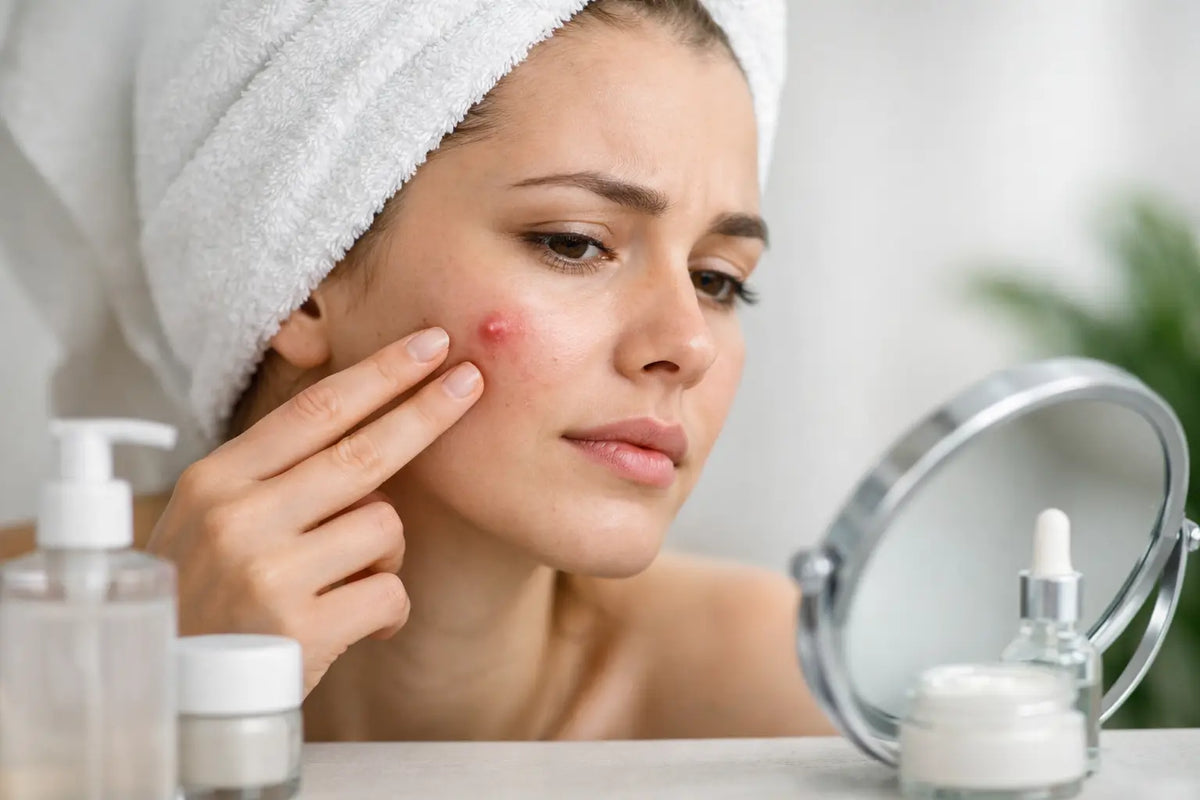
A deep, painful blemish under the skin does not need a harsher spot treatment. The right cystic breakout treatment for sensitive skin targets the congestion and inflammation behind the breakout while protecting the barrier that keeps your skin calm. When every product stings, flakes, or leaves your face tight, more intensity is rarely the answer.
Cystic breakouts are different from a surface-level whitehead. They form deeper in the pore, often feel tender before they are visible, and can linger for weeks. Picking at them or repeatedly drying them out can increase inflammation and raise the risk of post-acne marks. The goal is clear: treat acne at the source, without starting another burn-and-peel cycle.
Why Sensitive Skin Makes Cystic Acne Harder to Treat
Cystic acne begins when oil, dead skin cells, and debris build up inside a pore. Acne-causing bacteria and inflammation can then turn that blockage into a swollen, painful lesion. Hormonal shifts, stress, friction, genetics, and pore-clogging products can all play a role.
Sensitive skin adds another layer. A compromised barrier loses water more easily and reacts more quickly to strong formulas, excessive exfoliation, hot water, or too many active ingredients at once. That reaction can look like redness, tightness, itching, flaking, or a breakout that seems worse after you begin treating it.
This is the tradeoff many acne routines get wrong. They use enough drying actives to make skin feel stripped, then ask the skin to recover while continuing to fight new congestion. Dryness is not proof that a treatment is working. For sensitive, breakout-prone skin, it can be a sign that your routine is creating more stress than your skin can comfortably handle.
What a Cystic Breakout Treatment for Sensitive Skin Needs
An effective formula needs to do more than shrink the visible bump. It should help clear the pore, support healthier skin renewal, and avoid leaving the surface raw and dehydrated.
Salicylic acid is one of the most useful ingredients for this job because it is oil-soluble. It works inside the pore lining to help loosen the buildup that contributes to blackheads, whiteheads, and inflamed breakouts. At a proven 2% concentration, it can help keep pores clearer without requiring a stack of separate scrubs, masks, and harsh spot products.
But salicylic acid alone is not the whole answer for sensitive skin. A well-designed treatment should also consider inflammation, the skin microbiome, visible recovery, and moisture balance. Supportive ingredients can make a meaningful difference, especially when cystic breakouts and post-acne marks are part of the same cycle.
Retinol can support smoother-looking texture and more even skin renewal over time. Antimicrobial peptides can help address breakout-causing microbes. Probiotic ferments and skin-supporting botanical ingredients can help skin feel more balanced rather than chronically stripped. The point is not to layer all of these products yourself. It is to choose one focused formula engineered to work together.
XVolcano's XVesuvius is built around that no-burn approach, pairing 2% salicylic acid with Dermacetyl® complex, including antimicrobial peptides, retinol, honey, probiotic ferments, and Madagascar Dragon's Blood. It is designed to replace a fragmented routine with one twice-daily serum that treats active congestion while supporting smoother, more resilient-looking skin.
Stop Treating a Deep Breakout Like a Surface Pimple
The instinct to attack a cystic blemish is understandable. You want it gone before it becomes more swollen, more visible, and harder to cover. Yet aggressive tactics often backfire.
Avoid squeezing or trying to lance a deep breakout at home. Cysts sit below the surface, so pressure usually does not remove the blockage. It can push inflammation deeper, damage surrounding tissue, and make discoloration or scarring more likely.
Skip rough scrubs, cleansing brushes, and repeated applications of drying spot treatments on the same area. Physical friction and over-exfoliation can weaken the barrier, especially when the skin is already inflamed. If your face feels hot, glossy-tight, or painfully dry, do not add another active product to force a faster result.
A cool compress can temporarily ease the feeling of heat and tenderness. Beyond that, consistency wins. Use a targeted acne treatment as directed, cleanse gently, moisturize, and give the skin time to respond. Cystic blemishes can take longer to flatten than a small whitehead, even with a smart routine.
A Simple Routine That Does Not Overload Your Skin
Sensitive skin with cystic breakouts needs fewer competing signals. A streamlined routine makes it easier to see what is helping and reduces the risk of accidental irritation.
Morning: Keep Skin Calm and Protected
Start with a gentle cleanser that leaves your skin comfortable, not squeaky-clean. Apply your acne treatment in a thin, even layer according to its directions, rather than using a heavy glob only on the visible cyst. Acne prevention happens across the areas where congestion tends to return.
Follow with a lightweight, non-comedogenic moisturizer. Even oily skin needs hydration. A moisturizer can reduce the tight, dry feeling that tempts people to over-cleanse or overcorrect. Finish with broad-spectrum sunscreen every morning. Sun exposure can make post-acne marks look darker and can make sensitized skin harder to manage.
Evening: Treat, Then Let Skin Recover
Cleanse away sunscreen, makeup, sweat, and daily buildup without scrubbing. Apply your treatment to dry skin if the formula directions call for it, then use moisturizer. If you are new to active skincare or your barrier is visibly irritated, begin more slowly and build toward the recommended frequency as your skin tolerates it.
Do not introduce a new exfoliating toner, scrub, peel, or retinoid on the same week you start a comprehensive acne serum. Give the formula room to work. If you add something later, add one product at a time and watch for persistent burning, peeling, swelling, or increased sensitivity.
How to Know Whether It Is Purging, Irritation, or a Real Breakout
Not every flare after starting an acne routine means the same thing. Understanding the difference can prevent you from abandoning a useful treatment too soon or pushing through a reaction you should address.
Purging may happen when a cell-turnover ingredient brings pre-existing microclogs to the surface faster. It usually appears in your usual breakout zones and settles as your skin adjusts. It should not feel like widespread burning or an escalating rash.
Irritation is more likely when you experience stinging, itchy patches, diffuse redness, cracking, or flaking in places where you do not normally break out. That is a signal to simplify your routine, pause potentially irritating extras, and reassess how often you are applying active products.
A true acne flare can also come from hormonal changes, stress, occlusive makeup, hair products, sweat, or friction from masks and phone screens. This is why a simple routine matters. When you are using six new products, it is almost impossible to identify the trigger.
When a Dermatologist Should Be Part of the Plan
At-home skincare can make a real difference in recurring congestion and mild-to-moderate breakouts, but persistent cystic acne deserves medical support. See a dermatologist if lesions are painful, widespread, leaving scars, affecting your confidence or daily life, or failing to improve after a consistent routine.
A dermatologist can assess whether hormonal acne, prescription topicals, oral medication, or an in-office treatment may be appropriate. A large, painful cyst sometimes responds best to professional care rather than another week of home spot treatment. This is not a failure of your routine. It is the right level of treatment for a deeper inflammatory condition.
Clearer skin should not require punishing your face to get there. Choose a cystic breakout treatment that keeps pore-clearing performance and barrier comfort in the same conversation, then use it consistently enough to let healthier skin take over.


Share:
Serum for Stubborn Clogged Pores That Works
How to Prevent Recurring Acne Without Dryness