





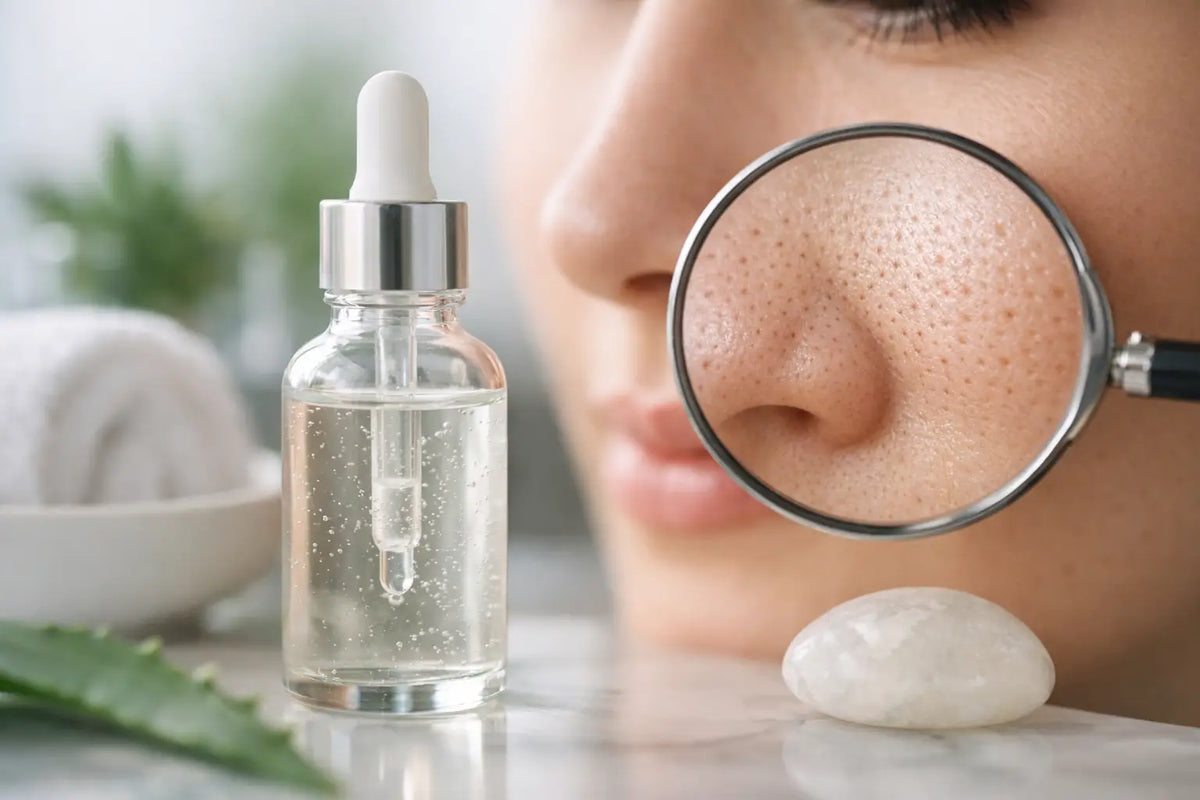
Your skin can feel bumpy, look dull, and still break out even when you are doing everything “right.” That is the frustration behind searching for a serum for stubborn clogged pores. The issue is not surface dirt. It is a cycle of oil, dead skin cells, inflammation, and buildup inside the pore - often made worse by harsh products that strip your skin until it fights back.
A real congestion treatment has to do more than dry out a pimple. It needs to reach into the pore, help loosen the buildup that keeps returning, and support the skin around it so treatment does not become another source of redness, peeling, and damage.
Why clogged pores keep coming back
Clogged pores begin when sebum and dead skin cells do not shed cleanly. Instead, they collect in the follicle and form tiny bumps, blackheads, whiteheads, and the beginning stages of deeper breakouts. Makeup, sunscreen, sweat, hormones, and heavy products can contribute, but they are rarely the whole story.
For many people, the bigger problem is an uneven shedding process inside the pore. When dead cells stick together, oil cannot flow normally. The pore becomes congested, bacteria can thrive, and inflammation has an opening. That is why a face wash alone may leave skin feeling clean without changing the texture you see in the mirror.
The common response is to scrub harder, add a strong toner, or rotate through multiple acne products. But over-cleansing and aggressive exfoliation can weaken the barrier. Skin then becomes tight, irritated, and more reactive. It may also produce more oil to compensate. That is the burn cycle: treat harder, get drier, break out again.
What a serum for stubborn clogged pores should do
The strongest serum is not necessarily the one that stings. For recurring congestion, look for a formula that combines pore-clearing action with barrier-conscious support. You need ingredients that address what is inside the pore and what is happening on the skin’s surface.
Salicylic acid clears where congestion starts
Salicylic acid is a beta hydroxy acid, meaning it is oil-soluble. Unlike a basic exfoliant that works mainly on the outer surface, it can move into oil-filled pores to help dissolve the mixture of sebum and dead cells that forms a clog.
A 2% salicylic acid concentration is a proven acne-treatment level for many skin types. It can help reduce blackheads, whiteheads, and active blemishes while keeping future congestion from taking hold. Results are cumulative. You may notice smoother-feeling skin early on, but clearer pores depend on consistent use through several skin cycles.
Salicylic acid is especially useful if your clogged pores show up as black dots on the nose, rough texture on the forehead, or stubborn closed bumps along the jawline and cheeks. It can also help when acne tends to flare beneath the skin before it becomes visible.
Retinol improves the way skin renews
Retinol supports cell turnover, helping prevent dead cells from lingering long enough to block pores. It also addresses the aftermath of acne: uneven texture, post-breakout marks, and the look of early fine lines.
There is a trade-off. Retinol can be irritating when it is introduced too fast, particularly if you are already using exfoliating acids, prescription acne medication, or a drying cleanser. The answer is not always to avoid it. It is to use a thoughtfully balanced formula and pay attention to how your skin responds.
Antimicrobial and calming support matters
Pore congestion is rarely just a texture issue. Once a clogged pore becomes inflamed, it can turn into a painful blemish that lingers long after the initial blockage is gone. Antimicrobial peptides can support clearer-looking skin by helping address breakout-causing activity, while probiotic ferments can help maintain a healthier skin environment.
Ingredients with soothing and antioxidant benefits can also make a difference. Honey, for example, is valued for its humectant and calming properties. Madagascar Dragon’s Blood is used to support skin comfort and antioxidant defense. These are not filler ingredients when your skin has been pushed too hard by traditional acne treatments. They help make consistent treatment possible.
Clear pores without turning your routine into a chemistry lab
You do not need a shelf full of separate products to target breakouts, blackheads, texture, marks, and early signs of aging. In fact, constant layering is often where irritation begins. Multiple acids, strong retinoids, drying spot treatments, and fragranced products can leave you guessing which step caused the flare.
A streamlined routine gives your skin a chance to respond. Cleanse with a gentle, non-stripping cleanser, apply a treatment serum as directed, and use a moisturizer that supports your barrier. In the morning, finish with broad-spectrum sunscreen. Sun protection is non-negotiable when you are working on post-acne marks and using ingredients that promote skin renewal.
XVolcano’s XVesuvius was built around this one-step treatment philosophy. Its 2% salicylic acid and Dermacetyl® complex combine pore-clearing action with retinol, antimicrobial peptides, honey, probiotic ferments, and Madagascar Dragon’s Blood - designed to fight acne at the source without forcing your skin through a dryness cycle.
How to use a clogged-pore serum without overdoing it
Consistency beats intensity. Apply your serum to clean, dry skin according to the product directions, then follow with moisturizer. If you are new to active skincare, sensitive, or recovering from an irritated barrier, start gradually rather than adding every active product at once.
Avoid pairing your treatment session with abrasive scrubs, peel pads, or another leave-on acid unless a dermatologist has specifically advised it. More exfoliation does not automatically mean faster clearing. It can mean inflammation, flaking, and a barrier that is too compromised to tolerate the treatment that could otherwise help.
Give your routine time. A clogged pore that has been forming for weeks will not disappear overnight. Aim to assess your skin after four to eight weeks of regular use, not after two frustrating days. Track the details that actually matter: fewer new bumps, smoother areas that used to feel rough, faster recovery after a breakout, and less need to pile on concealer.
When clogged pores may need more than a serum
A serum can be a powerful daily treatment, but it is not a substitute for medical care in every situation. If you have painful cystic acne, extensive scarring, sudden adult-onset breakouts, or acne that does not improve after a consistent routine, a dermatologist can help identify hormonal factors or prescribe additional treatment.
The same is true if your skin burns, swells, develops a rash, or stays intensely red after using a product. Stop using the suspected irritant and seek professional guidance. Effective acne care should challenge congestion, not make your skin feel injured.
The goal is clear skin that stays comfortable
Stubborn clogged pores do not need a harsher routine. They need the right kind of pressure: a clinically proven pore-clearing ingredient, renewal support that keeps dead cells moving, and skin-conditioning ingredients that help you stay consistent.
Start with one formula you can use faithfully, protect your skin from the sun, and resist the urge to punish every new blemish. The clearest progress often begins when your routine stops fighting your barrier and starts working with it.


Share:
2 Percent Salicylic Acid Serum Without the Burn
Cystic Breakout Treatment for Sensitive Skin