





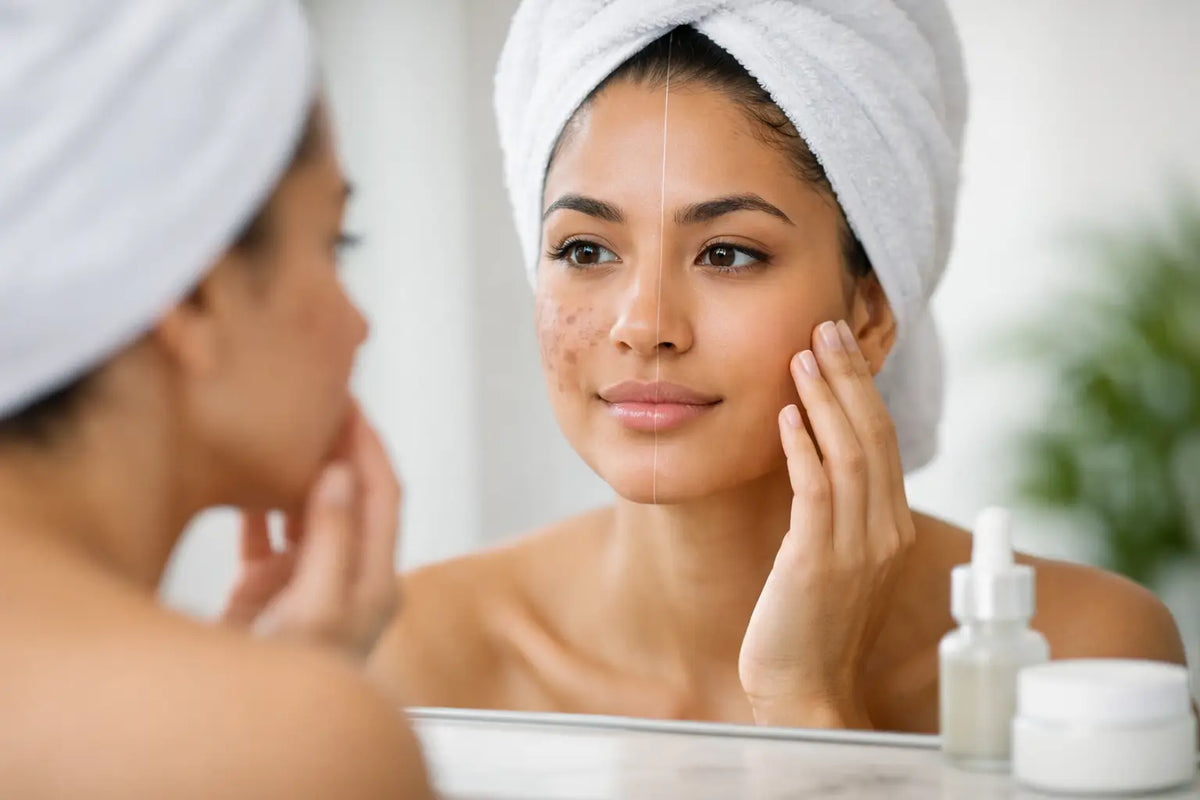
Those flat brown, red, or purple spots left behind after a breakout can feel more stubborn than the acne itself. To fade dark marks after acne, the goal is not to attack your skin harder. It is to stop the breakout cycle, support consistent renewal, and protect healing skin from the irritation and UV exposure that can make marks linger.
First, Know What You Are Treating
Most post-breakout discoloration is not a true scar. It is a visible mark created by inflammation. Post-inflammatory hyperpigmentation usually appears brown, tan, or gray-brown, especially in deeper skin tones. Post-inflammatory erythema tends to look pink, red, or violet and is linked to lingering changes in tiny blood vessels after inflammation.
That distinction matters because neither type responds well to panic treatment. Picking, over-exfoliating, scrubbing, and cycling through harsh spot treatments can create more inflammation. More inflammation can mean darker, longer-lasting marks - plus new breakouts to deal with.
Indented scars and raised scars are different. Topical skincare can improve surface texture and overall tone, but deeper scars may need individualized treatment from a dermatologist. Flat marks, however, can improve dramatically with a disciplined routine and enough time.
Why Dark Marks After Acne Take Time to Fade
Your skin has to move through its normal renewal process while the excess pigment gradually clears. That does not happen overnight, even with high-performance ingredients. A fresh mark may begin to look less noticeable in several weeks, while deeper or older discoloration can take months.
The biggest variable is whether acne is still active. Every new inflamed blemish can leave another mark behind, which is why treating discoloration while ignoring congestion is a losing strategy. Clearer-looking skin comes from working on both problems at once: prevent the next breakout and support the skin’s recovery from the last one.
There is also a trade-off that many acne routines get wrong. Strong acids and aggressive retinoid schedules may create fast visible peeling, but irritation can compromise the barrier and worsen the appearance of marks. The right routine should challenge congestion and dullness without trapping you in a burn cycle.
The Routine That Helps Fade Dark Marks After Acne
Start With Consistent Acne Control
Salicylic acid is a smart foundation when marks are paired with clogged pores, blackheads, and recurring blemishes. As an oil-soluble exfoliant, it works inside the pore lining to help clear trapped oil and dead skin cells. Fewer clogged pores means fewer opportunities for inflammation to leave a mark.
Use the product as directed and give it time. Constantly switching treatments makes it difficult to know what your skin tolerates or what is actually improving your acne. If you are using a leave-on acne treatment, avoid stacking it with multiple exfoliating acids unless a skin professional has specifically advised it.
Retinol can also support smoother-looking texture and more even tone by encouraging skin renewal. But more is not automatically better. If your skin is dry, stinging, visibly peeling, or tight after cleansing, slow down before adding another active. Consistency always outperforms intensity that your skin cannot sustain.
A streamlined formula such as XVesuvius can make this easier by pairing 2% salicylic acid with retinol, antimicrobial peptides, honey, probiotic ferments, and barrier-supportive ingredients in one twice-daily treatment. The point is not to pile on steps. It is to treat active congestion and the visible aftermath without making treatment dryness the price of progress.
Protect Your Results Every Morning
If you are serious about fading marks, daily broad-spectrum sunscreen is non-negotiable. UV exposure can deepen pigment, slow visible improvement, and make an otherwise effective routine feel like it has stopped working.
Apply a broad-spectrum SPF 30 or higher every morning, even when you are mostly indoors. Use enough for your face and neck, and reapply when you are outside for extended periods, sweating, or near windows for much of the day. For deeper skin tones, a sunscreen that blends clear or offers a well-matched tint can make daily use far more realistic.
Sunscreen does not erase existing marks by itself. It protects the progress your treatment is creating. Skipping it while using exfoliating or renewing ingredients is like cleaning up a spill while leaving the faucet running.
Keep the Barrier Comfortable
Acne-prone skin still needs hydration. In fact, skin that is stripped and dehydrated often becomes harder to manage. It can feel sensitized, look more red, and react poorly to ingredients that would otherwise be useful.
Choose a gentle cleanser that leaves your face comfortable, not squeaky. Follow treatment with a simple, non-comedogenic moisturizer when your skin needs it. Look for supportive ingredients such as glycerin, ceramides, squalane, or hyaluronic acid, but do not get caught in an ingredient scavenger hunt. A formula you will use consistently is more valuable than a complicated shelf of half-used products.
If you have oily skin, a lightweight lotion or gel-cream may be enough. If you are dry, sensitive, or using several acne actives, you may need a richer cream. The best texture is the one that keeps your skin calm without making you avoid moisturizing.
What Slows Down Progress
The fastest way to keep dark marks around is to keep creating inflammation. That includes squeezing blemishes, using rough facial scrubs, overusing clay masks, and treating every pimple like an emergency.
Avoid changing your entire routine at once. Introduce one new active product at a time, then watch your skin for at least a couple of weeks. Burning, persistent itching, swelling, or cracking are not proof that a product is working. They are signs to stop, simplify, and seek professional guidance if symptoms do not settle.
Be cautious with at-home remedies that promise instant brightening. Lemon juice, undiluted essential oils, toothpaste, and harsh DIY masks can irritate skin and increase discoloration. A mark is already a signal that your skin has been through inflammation. Do not give it another reason to stay.
When to Adjust Your Plan
If your marks are improving but acne is not, shift your focus toward preventing breakouts. If acne is controlled but discoloration has not budged after several months of consistent care and sun protection, a dermatologist can help identify whether you are dealing with pigment, redness, scarring, or a combination.
Professional options may include prescription retinoids, pigment-focused treatments, chemical peels, lasers, or other procedures. The right choice depends on your skin tone, sensitivity, acne activity, and scar type. Procedures can be powerful, but they are not automatically the first step - especially when active acne or a weakened barrier is still in the picture.
Pregnant or breastfeeding individuals should check with a qualified clinician before using retinol or other acne treatments. The same goes for anyone with eczema, rosacea, a history of melasma, or significant sensitivity.
Give Your Skin a Routine It Can Keep
Visible fading is built in ordinary moments: applying treatment consistently, moisturizing before your skin feels stripped, wearing sunscreen when nobody is watching, and leaving a blemish alone even when it is tempting to pick. That is how marks begin to lose their hold - without trading clear skin for damaged skin.


Share:
How to Prevent Recurring Acne Without Dryness
Skincare for Rough Acne Texture That Works