





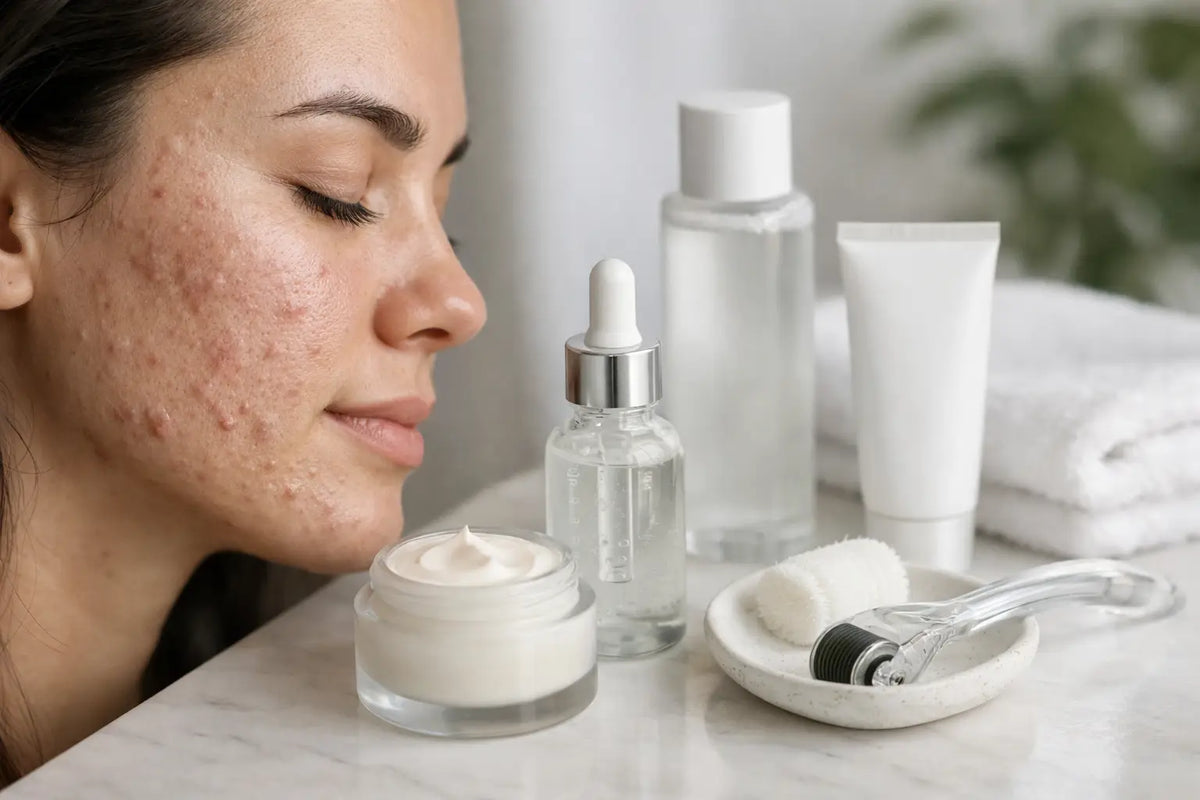
That rough, bumpy feeling is not something makeup can permanently blur away. Effective skincare for rough acne texture has to address what is happening below the surface: clogged pores, uneven shedding, lingering inflammation, and the treatment dryness that can make skin feel even less smooth.
The answer is not to scrub harder or stack five harsh actives. That approach often creates the burn cycle - irritation, peeling, more visible texture, then more products to compensate. Clearer-looking skin comes from consistent pore care and controlled renewal, with enough barrier support to keep treatment on track.
Why acne makes skin feel rough
Rough acne texture is not one single concern. It can look like tiny skin-colored bumps across the forehead or cheeks, congested pores around the nose and chin, raised healing blemishes, dry patches from acne products, or uneven areas left behind after a breakout. Different causes can overlap, which is why a random exfoliating scrub rarely solves the problem.
The most common driver is a pore that is not shedding normally. Dead skin cells, oil, and debris collect inside the follicle, creating a microclog before you ever see a pimple. As more material builds up, the pore can become a blackhead, whitehead, or inflamed breakout. Even when active acne settles, the surface may still feel uneven because congestion remains beneath it.
Inflammation adds another layer. A blemish can disrupt the skin’s normal renewal process, leaving redness, dark marks, and a less even surface while it heals. If your routine is overly drying, the barrier becomes stressed. Skin may feel tight and flaky while still producing oil and developing breakouts - the exact opposite of the smooth, balanced finish you want.
The formula for smoother acne-prone skin
A high-performance routine for rough texture needs two jobs to work together: clear inside the pore and improve how skin renews at the surface. It also needs to respect the barrier. Treatment that is too aggressive may make skin look temporarily smoother through peeling, but that is not the same as building consistently clear, resilient skin.
Use salicylic acid where congestion starts
Salicylic acid is a beta hydroxy acid that works inside oil-prone pores. It helps loosen the buildup that contributes to blackheads, whiteheads, and the small, persistent bumps that make skin feel grainy. For acne texture, this matters more than harsh physical exfoliation, which can create friction without effectively clearing a clogged follicle.
A 2% salicylic acid treatment is a proven strength for acne-prone skin, but frequency still matters. If you are new to exfoliating acids, starting once daily or every other day can be smarter than forcing twice-daily use immediately. Skin that is stinging, cracking, or visibly peeling is not “purging.” It may be irritated.
Add retinol with a barrier-aware approach
Retinol supports skin renewal and can help improve the look of uneven texture, post-breakout marks, and fine lines over time. It is not an overnight resurfacing trick. Results come from months of regular use, and the trade-off is that retinol can cause dryness or sensitivity when introduced too quickly.
That is why an intelligently formulated treatment matters. Rather than treating salicylic acid, retinol, hydration, and recovery as separate problems that require separate bottles, a streamlined serum can make consistency easier. XVolcano’s XVesuvius combines 2% salicylic acid with Dermacetyl®, a complex featuring retinol, antimicrobial peptides, honey, probiotic ferments, and Madagascar Dragon’s Blood to target breakouts and visible texture without building a punishing routine around them.
If you use any retinoid, wear broad-spectrum sunscreen every morning. Retinoids can increase sensitivity to sun exposure, and UV exposure can deepen the post-acne discoloration that makes texture look more pronounced. If you are pregnant, trying to conceive, or breastfeeding, ask your clinician before using retinol.
Protect the barrier so treatment can keep working
A damaged barrier does not make acne treatment more effective. It often creates burning, tightness, flaking, and reactive oiliness that can disguise progress and make every bump feel more obvious. Your skin needs water-binding ingredients, soothing support, and a moisturizer that does not leave you feeling greasy or congested.
Barrier support is especially useful when roughness is partly dry texture rather than active clogs. If your face feels smooth right after cleansing but turns tight, dull, or flaky within an hour, dehydration may be contributing. In that case, adding more exfoliation is usually not the first move. Use a gentle cleanser, apply treatment as directed, and follow with a simple moisturizer.
A simple routine for rough acne texture
The goal is not a 10-step routine. It is a routine you can use long enough to see a change in the way your skin behaves.
Morning
Cleanse with lukewarm water and a gentle cleanser that does not leave your skin squeaky. Apply your acne treatment according to its directions, then use moisturizer if needed. Finish with broad-spectrum SPF 30 or higher every day, including when you are treating marks rather than active breakouts.
Sunscreen is not optional polish. It helps prevent dark spots from lingering and protects skin that is adjusting to salicylic acid or retinol. Choose a formula you will actually wear consistently, whether that means a lightweight gel, lotion, or mineral option.
Night
Cleanse away sunscreen, oil, and makeup without scrubbing. Apply treatment to clean, dry skin, avoiding eyelids, corners of the nose, and lips. Then moisturize. If you are sensitive, try the moisturizer before and after treatment for a cushioning “sandwich” approach, or reduce use until your skin settles.
Do not add a scrub, strong peel, cleansing brush, or extra leave-on acid just because you want faster results. Rough acne texture improves when the skin cycle becomes more regular, not when it is constantly inflamed. Give a new routine at least six to eight weeks before deciding whether it is helping, unless you develop significant irritation or an allergic-type reaction.
What to stop doing when texture will not budge
First, stop picking. Squeezing a bump can rupture the follicle wall, extend inflammation, and raise the risk of lingering marks or scars. A hydrocolloid patch can be a useful physical reminder to leave a blemish alone, but it will not replace pore-clearing treatment.
Second, stop chasing the “clean” feeling. A cleanser that strips your face may feel powerful, yet tightness after washing is a warning sign, not proof that your pores are cleaner. The same goes for grainy scrubs and frequent at-home peels. They can make dry texture more visible and interfere with your ability to tolerate the ingredients that actually treat acne.
Third, be realistic about what skincare can change. Clogged pores, superficial bumps, uneven tone, and mild roughness often respond well to a consistent routine. Deep pitted scars, rolling scars, or thick raised scars usually require professional options such as microneedling, laser treatment, subcision, or injections. A dermatologist can help distinguish active congestion from scarring and create a plan that matches your skin.
When rough texture needs medical support
See a dermatologist if breakouts are painful, cystic, spreading, leaving scars, or not improving after a consistent routine. You may need prescription treatment, especially when hormonal acne or deep inflammation is involved. Seek care sooner if a product causes facial swelling, hives, severe burning, or persistent cracking.
There is no prize for tolerating treatment damage. The best acne routine is the one that clears congestion while leaving your skin calm enough to continue.
Start with steady, barrier-respecting care, track progress with photos every few weeks, and let smoother skin be the result of consistency - not punishment.


Share:
How to Fade Dark Marks After Acne Without Damage
Can Salicylic Acid Cause Peeling? What to Do