





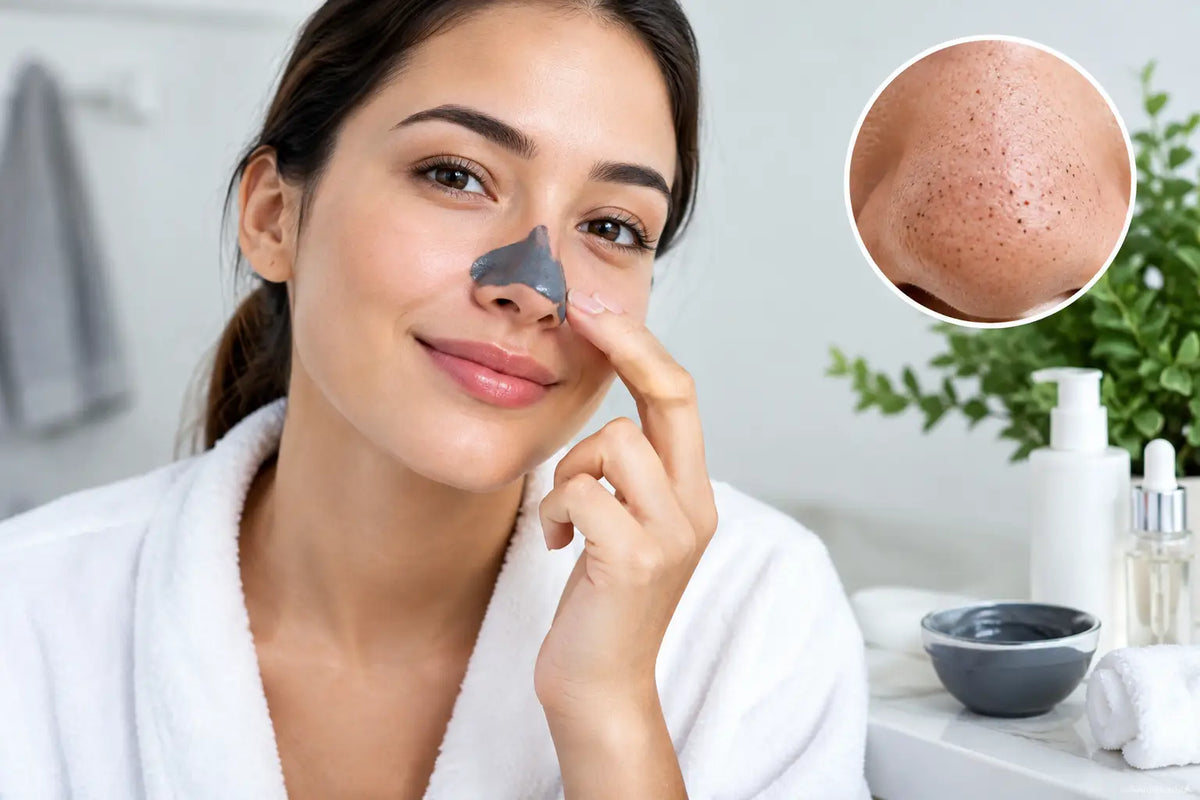
Blackheads respond best to a consistent pore-clearing routine, not harsh scrubs, squeezing, or a new bottle every few days. This blackhead treatment guide is for the person with a drawer of half-used products who is tired of treating adult breakouts like a hygiene failure.
Blackheads are not dirt trapped in the skin, and they are not proof that you are doing something wrong. They form when oil and shed skin cells collect in a pore; when that material reaches the surface and is exposed to air, it darkens. The goal is to keep that buildup moving out of the pore without making your skin so dry or irritated that it feels worse than the blackheads did.
Which blackhead treatments actually work?
Salicylic acid is a sensible starting point because it is oil-soluble and works within the pore environment where clogs begin. The FDA's over-the-counter acne monograph recognizes salicylic acid in the range of 0.5% to 2% for acne treatment. It can help clear existing blackheads and help prevent new clogged pores when used consistently according to the product directions.
A retinoid can also be useful, particularly if blackheads arrive with uneven texture, recurring breakouts, or the early appearance of fine lines. Retinoids help normalize how skin cells shed, which can reduce the conditions that lead to clogged pores. Prescription retinoids and over-the-counter options are not interchangeable, and irritation is a real trade-off. More product does not mean faster progress.
Gentle cleansing and a moisturizer that does not leave your skin feeling coated or tight complete the routine. A sunscreen you will actually use matters, too, because irritation and sun exposure can make post-acne marks look more noticeable. This is not a long ritual. It is a small set of steps done long enough to judge fairly.
| Routine step | What it is for | What to avoid |
| --- | --- | --- |
| Gentle cleanse | Removes surface oil, sunscreen, and makeup | Scrubbing until skin feels squeaky |
| Salicylic acid treatment | Helps clear clogged pores | Layering several exfoliants at once |
| Moisturizer | Helps skin feel comfortable during treatment | Skipping it because your skin is oily |
| Sunscreen | Helps limit the visible darkening of post-acne marks | Treating it as optional after using retinoids |
Is salicylic acid enough for blackheads?
Sometimes, yes. If blackheads are your main concern and your skin is otherwise calm, a salicylic acid treatment plus a gentle routine may be enough. The most common mistake is changing course before the routine has had a fair chance to work. Blackheads form gradually, so they do not respond like a spot you can dry out overnight.
It depends on what else is happening. If you also have inflamed pimples, frequent breakouts around the chin or jaw, or skin that feels persistently irritated, the answer may be more than adding another exfoliant. A dermatologist can sort out whether the pattern calls for prescription treatment or whether another condition is involved.
Be careful with pore strips and aggressive extractions. A pore strip can lift material from the surface and look satisfying, but it does not address the tendency for that pore to clog again. Pressing, picking, and repeated scraping can leave redness, tenderness, and more visible post-acne marks. If you want extractions, a trained professional is the safer route.
Can you use retinol and salicylic acid together?
Yes, retinol and salicylic acid can be used in the same routine, but the right approach depends on how your skin responds. The issue is not that the ingredients cancel each other out. The issue is irritation: stinging, persistent dryness, flaking, or skin that suddenly reacts to products it usually tolerates.
Start with the directions on each product, and do not introduce several treatments at the same time. If your skin becomes uncomfortable, simplify. Use a gentle cleanser, moisturizer, and sunscreen, then reintroduce treatment carefully rather than trying to push through a reaction. People who have spent years fighting adult acne often mistake discomfort for effectiveness. It is not a requirement for clearer pores.
Retinol is commonly used for the appearance of smoother skin and fine lines. It is not a substitute for an FDA over-the-counter acne drug when acne is the concern. A formula that combines salicylic acid with cosmetic ingredients may help reduce the clutter on your bathroom shelf, but you should still read the Drug Facts panel and follow its directions.
If you are pregnant or breastfeeding, ask a doctor before choosing an acne or retinol routine.
What makes blackheads keep coming back?
Blackheads can recur because pores continue to make oil and shed skin cells. Skin care can manage that process, but it cannot change the fact that pores exist or make them physically disappear. Marketing often treats visible pores as a flaw with a single fix. In reality, the best outcome is usually pores that look clearer and less congested.
Heavy makeup or skin care products can contribute for some people, but there is no universal blacklist of ingredients. The useful question is whether a product repeatedly seems to leave your skin more congested. Change one thing at a time so you can tell what helped and what did not.
Stress, cycle-related changes, and genetics can all affect breakouts. None of this means you caused your acne through poor discipline, imperfect eating, or missed cleansing. Washing more often can make things worse if it strips the skin and leads you to pile on stronger treatments.
When should you see a dermatologist for blackheads?
See a dermatologist if your breakouts are painful, widespread, leaving lasting marks, or not improving with a consistent over-the-counter routine. A dermatologist should also evaluate deep, tender bumps, sudden severe acne, or a pattern that has changed sharply. Cystic and nodular acne require medical care rather than more exfoliation.
For a parent helping a teenager, keep the routine simple and calm. Ask a doctor before choosing treatment for a child. If acne is upsetting your teen or affecting daily life, a dermatology visit is reasonable. You do not need to wait until the situation feels severe to ask for help.
The American Academy of Dermatology recognizes topical retinoids and salicylic acid among acne treatment options. The practical lesson is less glamorous than a complicated routine: use treatments consistently, protect your skin from unnecessary irritation, and get medical input when over-the-counter care is not enough.
For someone who wants a single twice-daily step, XVesuvius® is an FDA over-the-counter acne drug formulated with 2% salicylic acid and cosmetic ingredients including encapsulated retinol, peptides, honey, ferments, and botanical extracts. It is one option for treating acne while supporting skin that looks smoother and more even. Choose the simplest routine you can keep using without making your skin miserable.


Share:
Best Serums for Acne Texture That Actually Help
Acne Serum Versus Spot Treatment for Adult Acne