





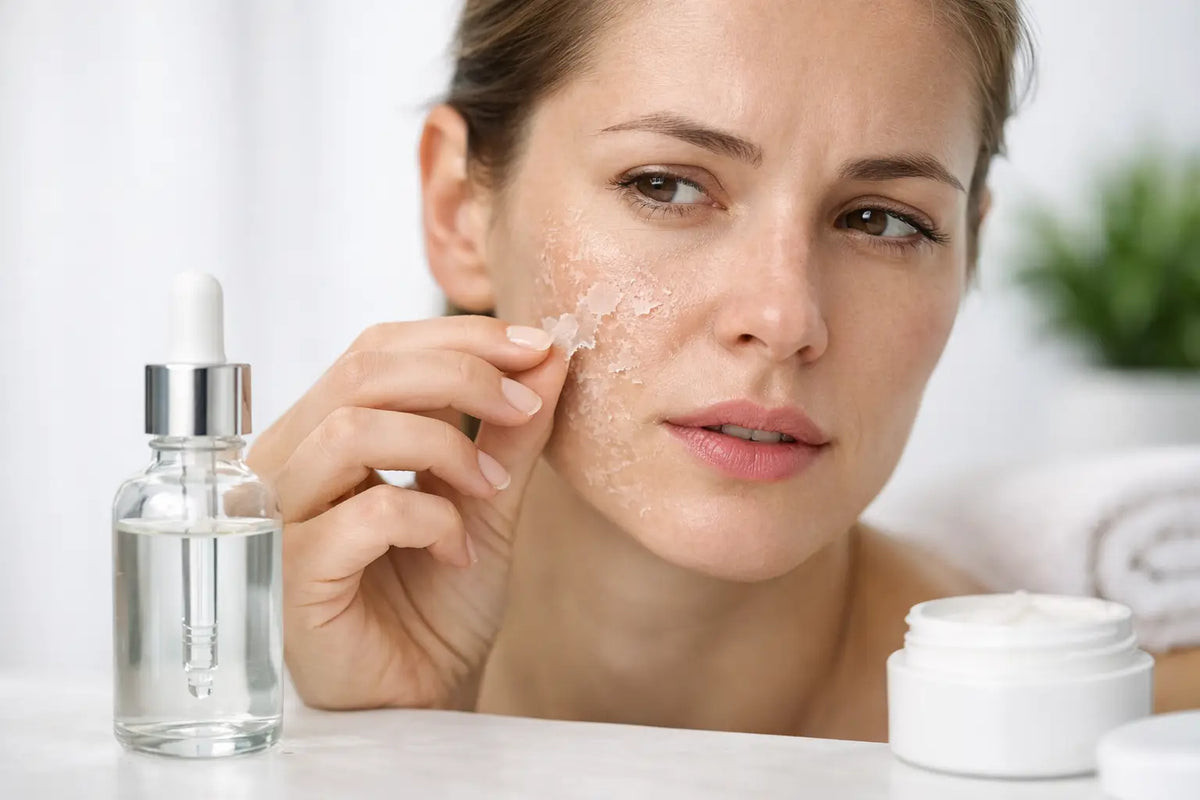
A flaky patch around your nose, tightness after cleansing, makeup catching on dry skin - none of that feels like a win, even if your acne treatment is working. So, can salicylic acid cause peeling? Yes. It can speed up the shedding of dead surface cells, and when your skin is not prepared for that activity, visible flakes, dryness, and irritation can follow.
But peeling is not a requirement for clear skin. It is often a sign that your routine is asking more of your barrier than it can comfortably handle. The goal is not to push through a burn cycle. The goal is to keep pores clear while your skin stays calm, hydrated, and strong.
Can Salicylic Acid Cause Peeling Even at 2%?
Salicylic acid is a beta hydroxy acid, or BHA. Unlike water-soluble exfoliants that work mainly on the skin’s surface, salicylic acid is oil-soluble. It can move into pore-lining oil, helping loosen the mix of dead skin cells and sebum that creates blackheads, whiteheads, and recurring congestion.
That pore-clearing action is why it is a proven acne ingredient. It is also why it can cause peeling. As cell buildup is released and surface turnover changes, skin may look dry or flaky, especially during the first few weeks of use.
A 2% concentration is commonly used for acne-prone skin, but concentration is only part of the equation. Peeling can depend on how often you apply it, how much you use, the rest of your routine, your climate, and the current state of your moisture barrier. Skin that is already dry, over-cleansed, sun-stressed, or irritated by other actives has far less room for additional exfoliation.
Salicylic acid should help treat acne at the source. It should not leave your face feeling raw in the process.
Why Peeling Happens
Not all peeling means the same thing. A small amount of temporary dryness when introducing an active can happen. Persistent flakes, redness, burning, stinging, or painful tightness point more clearly to irritation.
Salicylic acid can disrupt the balance when it is used too aggressively. Applying it more often than your skin tolerates, pairing it with a stripping cleanser, or adding multiple exfoliants at once can remove too much of the protective material between skin cells. Water escapes more easily, and the barrier becomes less capable of defending itself from ordinary irritants.
Retinoids, benzoyl peroxide, glycolic acid, lactic acid, exfoliating scrubs, alcohol-heavy toners, and harsh clay masks can all raise the chance of peeling when combined carelessly. That does not mean these ingredients are always incompatible. It means a high-performance routine needs intention, not a pile-on approach.
Weather can make the issue worse too. Cold, dry air, indoor heat, wind, and frequent hot showers all increase water loss. A routine that felt fine in humid July may suddenly cause flaking in January.
Peeling vs. Purging: Know the Difference
“Purging” gets used to explain almost every bad reaction, but it has a more specific meaning. Because salicylic acid helps clear clogged pores, it may bring existing microclogs to the surface faster. This can look like a temporary increase in small breakouts in your usual acne-prone areas.
Peeling is different. Flakes, burning, itchiness, tenderness, and redness are generally irritation signals, not proof that a product is pulling out impurities. New blemishes in areas where you do not normally break out, deep inflamed lesions that continue to worsen, or a rash-like reaction also deserve a closer look.
Do not treat discomfort as a badge of progress. Clearer skin does not require cracked, angry skin. If your face stings when you apply plain moisturizer or water, pause the active and focus on barrier recovery.
How to Use Salicylic Acid Without the Damage
The smartest routine is the one you can sustain. Start with a thin, even layer rather than repeatedly treating every individual blemish. More product does not mean faster pore clearing, but it can mean more irritation.
If you are new to salicylic acid or returning after a break, begin every other day or a few times per week. Give your skin 10 to 14 days to show you how it responds before increasing frequency. If it remains comfortable, you can work toward the use pattern recommended by your product.
Keep the rest of your routine deliberately simple. Use a gentle cleanser that does not leave your skin squeaky or tight. Follow with a moisturizer containing barrier-supportive ingredients such as ceramides, glycerin, hyaluronic acid, or squalane. During the day, use broad-spectrum sunscreen. Freshly exfoliated skin is more vulnerable to visible irritation and sun-related discoloration, especially after acne.
For many people, it also helps to alternate stronger treatments rather than layering them in the same routine. If you use a prescription retinoid, benzoyl peroxide, or another exfoliating acid, ask a dermatologist or pharmacist how to schedule them. Your best schedule may be salicylic acid in the morning and a retinoid at night, or alternating nights. It depends on your formula, your acne severity, and your barrier.
What to Do When Your Skin Is Already Peeling
First, stop trying to exfoliate the flakes away. Scrubs, cleansing brushes, peeling gels, and rough towels can turn mild dryness into a compromised barrier. Let the loose skin release naturally.
Take a short break from salicylic acid and other strong actives until stinging and active peeling settle. Cleanse gently, moisturize consistently, and protect your skin from the sun. A plain, fragrance-free moisturizer is often more useful than adding another corrective serum while your barrier is stressed.
When your skin feels normal again, restart slowly. Consider using salicylic acid less frequently, reducing the amount applied, or changing the rest of your routine. If peeling returns every time despite a careful introduction, that formula or frequency may not be right for you.
Seek medical advice if you develop swelling, hives, severe burning, cracking, oozing, eye-area irritation, or symptoms that do not improve after you stop the product. People with eczema, rosacea, very dry skin, or known aspirin sensitivity should be particularly cautious with salicylic acid and consult a clinician before use.
A Better Standard for Acne Treatment
Acne care has been taught as a tradeoff for too long: clear pores now, deal with redness and peeling later. That approach can keep people stuck in a frustrating cycle of over-treating, stopping, breaking out again, then starting over.
A more effective standard combines acne-fighting ingredients with support for the skin barrier. XVolcano’s XVesuvius is designed around that principle, pairing 2% salicylic acid with Dermacetyl® complex ingredients that support a more complete skin-renewal routine instead of forcing you to stack multiple harsh steps.
Still, every active treatment deserves a thoughtful introduction. Even a well-designed formula can feel like too much if your skin is already sensitized or if you combine it with an aggressive routine. Follow the product directions, adjust based on your skin’s response, and avoid introducing several new actives in the same week.
The clearest sign that your routine is working is not a dramatic peel. It is skin that gradually becomes less congested, smoother, and more even while still feeling comfortable enough to care for every day.


Share:
Skincare for Rough Acne Texture That Works
Retinol for Acne Prone Skin Without the Burn