





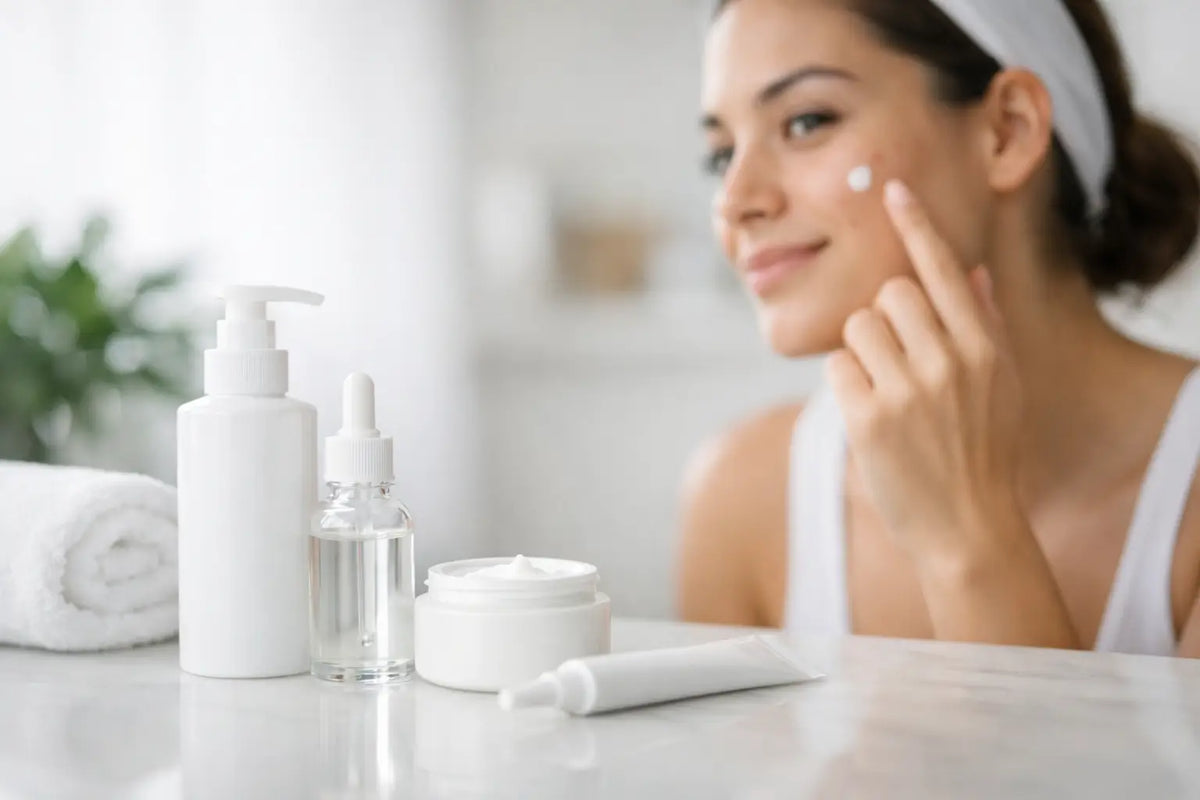
A simple acne routine is not about using the fewest possible products. It is about using one clear acne treatment consistently, then keeping the rest of the routine quiet enough that your skin and your schedule can tolerate it. For most people with recurring breakouts and clogged pores, that means a cleanser, a treatment used as directed, and sunscreen during the day.
The drawer of half-used bottles usually starts with good intentions. A spot treatment for surprise blemishes, an exfoliant for texture, a serum for marks, another product for dryness. Soon, it becomes difficult to tell what is helping, what is irritating, and what is simply too much to keep up with on a busy Tuesday.
What a simple acne routine should do
A routine should give you a repeatable answer when you look in the mirror and see another breakout: cleanse, treat the affected area, continue. It should not require you to diagnose every pore or change course every few days.
Consistency matters because acne treatment works across the areas where blemishes tend to form, not only on the one blemish that appeared overnight. A treatment applied only as an emergency measure can leave the rest of an acne-prone area untreated. Using a product as directed over the areas that commonly break out is usually more practical than chasing individual spots.
Simple also means paying attention to how your skin feels. Tightness, stinging, flaking, or persistent discomfort can make a routine difficult to maintain. Those signals do not mean you failed or that your skin needs more effort. They are useful information that the routine may need to be simplified further or adjusted with a healthcare professional.
The core of a simple acne routine
For persistent congestion and recurring blemishes, salicylic acid is a familiar over-the-counter option. It is used in acne treatment to help clear acne blemishes and help prevent new blemishes from forming. It is not a cure, and it cannot predict which area will break out next. Its value is in regular use according to the product label.
XVesuvius is an FDA over-the-counter acne drug formulated with salicylic acid as its sole drug active ingredient. Its Dermacetyl complex includes encapsulated retinol, peptides, honey, ferments, and botanical extracts. These are clinically studied ingredients in the formula, but they are not drug active ingredients. Any improvement in the visible appearance of texture, fine lines, tone, or post-blemish marks is separate from the product's acne treatment use.
A treatment product can replace much of the decision-making in a crowded routine. It does not need to replace a gentle cleanser or daytime sunscreen. Cleansing removes the day without turning cleansing into a second treatment step. Sunscreen is useful because irritated or dry-feeling skin can be more uncomfortable in daylight, and because it supports a more consistent routine.
Morning: keep the steps ordinary
Wash with a cleanser that feels comfortable on your skin, then use your acne treatment as directed. Follow with sunscreen if you will be exposed to daylight. If makeup is part of your day, choose products you can remove without scrubbing or repeatedly washing your face.
There is no prize for making the morning routine complicated. The best version is the one that still happens when you are late, traveling, tired, or dealing with a breakout you would rather not think about.
Evening: treat, then leave skin alone
At night, cleanse and use the treatment as directed. A twice-daily treatment schedule can be easier to remember when it is attached to habits that already exist, such as brushing your teeth. Apply it as directed to the areas affected by acne rather than treating only the most visible blemish.
Then stop. Do not assume a burning sensation means the routine is working. Do not add a new exfoliating acid, scrub, peel, or extra retinoid just because a blemish is taking longer than you want. More layers can make it harder to identify the source of irritation and harder to use the routine consistently.
Where simple routines usually go wrong
The most common problem is not lack of effort. It is too many changes at once. Starting a new acne treatment while adding a scrub, a mask, a separate retinoid, and a heavy new moisturizer makes every reaction difficult to interpret.
Give the core routine room to be the core routine. If your skin feels dry, choose a plain moisturizer that is comfortable to use and introduce it without changing several other things. If irritation persists, stop and review the Drug Facts label. A pharmacist, dermatologist, or other healthcare professional can help sort out whether the product, frequency of use, or another step is contributing.
Another problem is treating acne as a cleanliness issue. It is not. Washing more often or scrubbing harder can leave skin feeling stripped and sore, without making a routine easier to continue. Cleanse gently. Use the acne treatment as directed. Let regular use do the work it is designed to do.
A simple acne routine for adults with more than one concern
Adult acne can feel especially unfair because it often appears alongside visible texture changes, fine lines, or uneven-looking tone. The answer is not automatically a longer routine. It may be a routine with clearer priorities: treat acne first, avoid piling on irritating steps, and choose supporting products that do not turn every application into a test of endurance.
Post-blemish marks and uneven texture can take on a life of their own in the mirror. Acne treatment cannot promise to erase them. Still, a routine that helps manage new blemishes may make it easier to assess the visible appearance of older marks and texture without constantly adding another corrective product.
For adults who have already spent years cycling through spot treatments, prescriptions, and elaborate regimens, a shorter routine is not settling. It can be a more realistic way to stay with treatment long enough to judge how your skin responds.
If you are building a routine for a teenager
For a parent, the goal is often to help without turning the bathroom counter into a source of stress. Start with the product label, a gentle cleanser, and a sunscreen your child will actually use. Keep the routine visible and easy to repeat rather than assembling a complicated collection of treatments.
Watch for ongoing dryness, stinging, or peeling. Encourage your child to tell you how their skin feels rather than pushing through discomfort alone. A healthcare professional is appropriate if breakouts are widespread, painful, leaving noticeable scars, or causing significant distress. Professional support is also reasonable when an over-the-counter routine has become confusing or difficult to manage.
Let the routine earn its place
A useful acne routine should fit into real life, including the mornings when you have no patience for another bottle and the evenings when you want to be done. Keep the treatment clear, keep the supporting steps modest, and pay attention to comfort. The goal is not a perfect shelf. It is a routine you can return to tomorrow.


Share:
Honey for Acne: Does It Actually Clear Breakouts?
Is an Acne Treatment Subscription Worth It?