





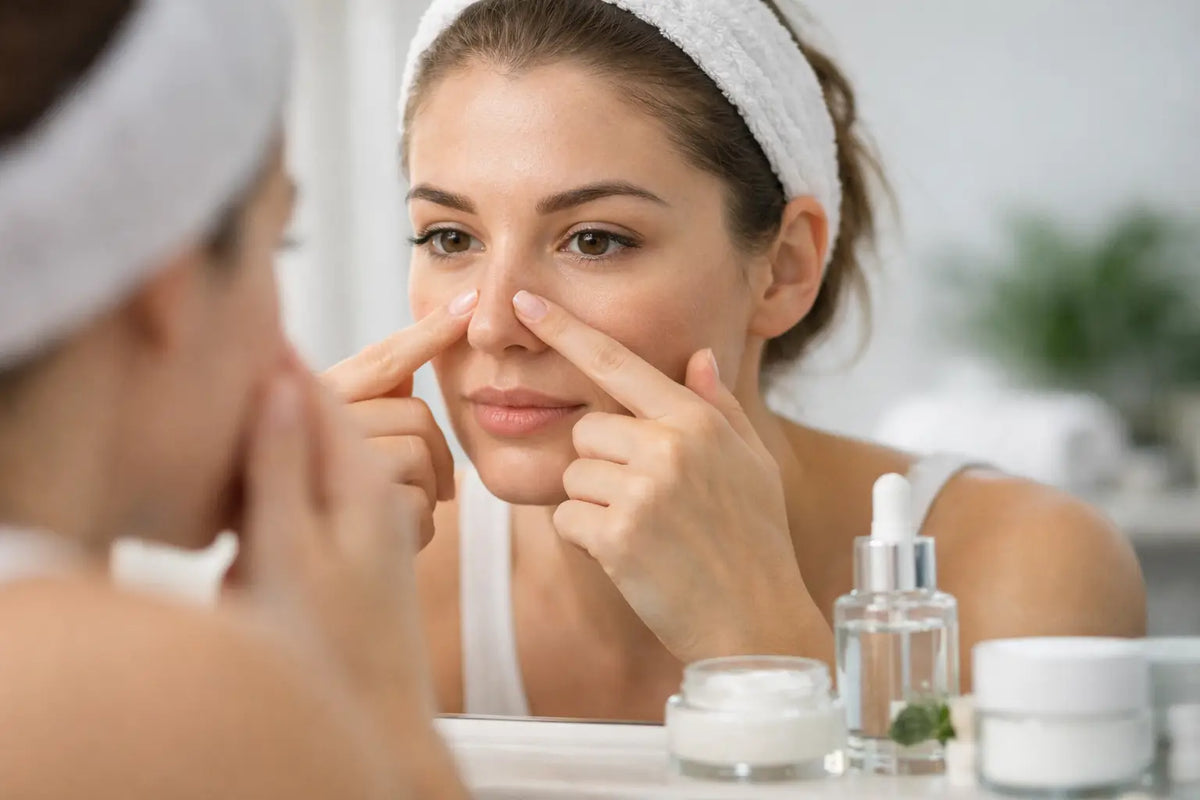
Clogged pores respond best to a routine that clears buildup steadily, rather than a cycle of scrubbing, burning, and stopping. If you are looking for how to treat clogged pores, start with a pore-clearing acne medicine, use it as directed, and remove the extra steps that leave your skin feeling raw or unpredictable.
A clogged pore is not evidence that you did anything wrong. Oil, dead skin cells, makeup, sunscreen, and ordinary skin-cell shedding can collect in the follicle opening. The result may look like blackheads, small skin-colored bumps, rough patches, or breakouts that return in the same areas.
Why clogged pores keep coming back
Pores are not doors that open and close. They are follicle openings, and they can look more noticeable when buildup collects near the surface. A blackhead is a clogged pore with an open surface. A small bump with no dark center is usually closed at the surface.
The frustrating part is that congestion often starts before there is much to see. You may notice foundation catching around the chin, a bumpy forehead, or recurring blemishes along the jaw and cheeks. Trying to force an immediate change with a scrub, cleansing brush, or several acids at once can make skin feel stinging and tight. That discomfort makes a routine harder to continue.
Adults can run into a separate version of this problem. Skin may be managing recurring breakouts while also looking less even in texture or showing fine lines more visibly. A routine built around harsh spot treatment can feel especially impractical here. The goal is not to chase every pore with another bottle from the bathroom drawer. It is to use a routine your skin can tolerate consistently.
How to treat clogged pores with salicylic acid
Salicylic acid is a common over-the-counter acne medicine for clogged pores and acne blemishes. It helps loosen the mixture of oil and shed skin cells that can collect in follicles. Used regularly and according to its Drug Facts directions, it can be a sensible starting point for recurring congestion.
Choose one salicylic acid product and give it room to work. Applying several exfoliating products in the same routine can make it difficult to tell what is helping and what is causing irritation. More product is not automatically more useful.
Keep the routine deliberately small
Begin with a gentle cleanse that removes the day without leaving your face squeaky or uncomfortable. Apply the salicylic acid acne medicine according to the label, then use a moisturizer if your skin feels dry. During daylight hours, use sunscreen suited to your skin.
That can be enough. You do not need a separate toner, scrub, peel pad, mask, and spot gel to show that you are taking congestion seriously. For many people, the simpler routine is the one that stays on the counter instead of becoming a collection of half-used bottles.
If you use other products with exfoliating acids, retinoids, or benzoyl peroxide, introduce changes cautiously. It may make sense to use them at different times of day or on different days, depending on how your skin feels and the directions for each product. A pharmacist or clinician can help sort through a routine that has become crowded.
Let your skin's response set the pace
Mild dryness can happen when beginning an acne medicine. Persistent burning, swelling, pronounced peeling, or a rash is different. Stop use and follow the product warnings if those symptoms occur. Do not try to push through significant irritation in the hope that it means the product is working.
A useful routine should leave skin feeling clean and comfortable enough to repeat. If your face feels hot, sore, or flaky every day, simplify. Use a bland moisturizer, pause the nonessential exfoliating steps, and reassess what you are applying.
What not to do for clogged pores
Avoid picking, squeezing, or using extraction tools at home. Pressure can turn a small clogged pore into an inflamed blemish and may leave a visible mark. The same goes for aggressive scrubs. Rough particles can feel satisfying in the moment, but they do not address the cause of repeated congestion.
Heavy makeup and sunscreen are not automatically the problem either. If a product seems to coincide with congestion, consider changing one item at a time. Look for products labeled non-comedogenic if that is useful to you, but treat the label as a starting point, not a promise. Your own skin's pattern matters more.
Do not keep switching products every few days. Clogged pores form over time, and skin needs a stable routine before you can make a fair judgment. Consistency is not glamorous. It is usually more useful than another dramatic reset.
A one-product option for persistent congestion
For someone who wants to replace a fragmented routine, XVesuvius® is an FDA over-the-counter acne drug formulated with salicylic acid. Its drug active is salicylic acid, and its Dermacetyl® complex includes encapsulated retinol, peptides, honey, ferments, and botanical extracts. The Drug Facts panel should guide use, warnings, and whether it fits with the other products already in your routine.
It may be a practical option when the real obstacle is not a lack of products, but too many overlapping steps. A product cannot make every form of acne or uneven texture disappear, and it cannot substitute for medical care when symptoms need evaluation. It can make a regular acne-treatment routine easier to maintain when used as directed.
If you are pregnant, nursing, have very reactive skin, or are using prescription skin treatments, ask a clinician before adding a routine that contains retinol or other acne medicines. For a parent choosing a routine for a teenager, reading the Drug Facts label together and keeping the first routine simple can prevent needless overuse.
When clogged pores need clinical care
Consider seeing a clinician when breakouts are painful, leave visible scars, spread quickly, or continue despite a consistent over-the-counter routine. Seek medical guidance if irritation is substantial or if you are unsure whether what looks like congestion is actually a different skin concern.
A clinician can also help when acne and visible signs of aging are competing for attention. The answer is not necessarily more treatment. Often, it is a clearer plan: what to keep, what to stop, and what your skin can realistically tolerate.
Your skin does not need to earn its way through discomfort. Start with one well-chosen acne treatment, keep the rest of the routine calm, and give consistency a chance to do its quiet work.


Share:
Is an Acne Treatment Subscription Worth It?
Top Barrier-Friendly Acne Treatments Explained