




The most useful blackhead treatment is a leave-on salicylic acid product used consistently, because it works inside the pore instead of scrubbing at its surface. If you have a drawer of half-used masks, strips, acids, and spot treatments, you already know that making your skin feel stripped is not the same as getting it clear.
Blackheads are common, stubborn, and oddly easy to misunderstand. They are not a sign that you are dirty, undisciplined, or using the wrong towel. They are clogged pores with an opening at the surface. The dark color is not trapped dirt. It is oil and skin debris exposed to air.
What is the best blackhead treatment for clogged pores?
For most people, salicylic acid is the practical place to start. It is oil-soluble, which means it can work in the pore lining where blackheads begin. The FDA recognizes salicylic acid at concentrations from 0.5% to 2% for over-the-counter acne treatment.
A leave-on formula matters because it has more contact with the skin than a cleanser that is rinsed away. This does not mean stronger is always better. A product that leaves your face tight, flaky, or burning can make it harder to stay consistent. The goal is clear-looking skin with less of the irritation cycle, not a dramatic tingle.
The American Academy of Dermatology includes salicylic acid among commonly used options for acne with clogged pores. Peer-reviewed dermatology literature makes a similar distinction: blackheads respond best to treatments that address the buildup within the follicle, not just surface oil.
Why do blackheads keep coming back?
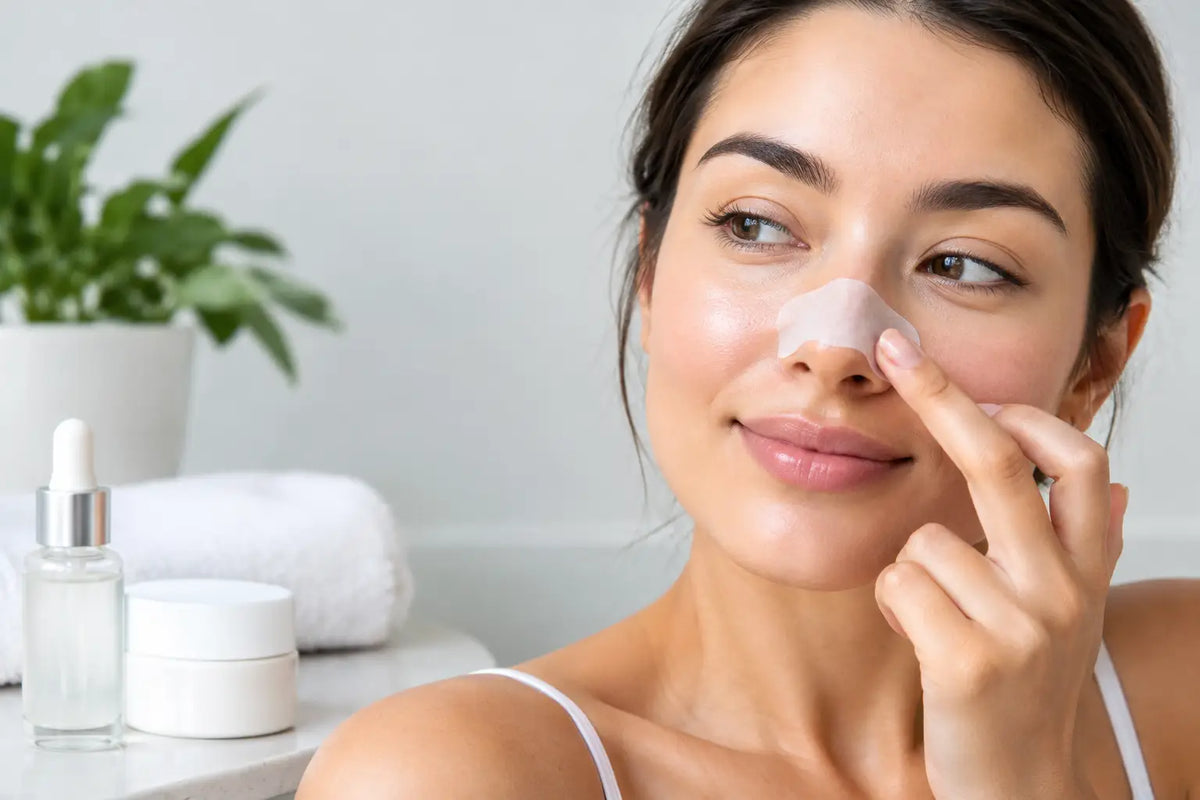
A blackhead forms before you can see it. Skin cells and oil collect in a pore, and the material reaches the surface. Once it is exposed to air, it darkens. A pore strip can pull out some visible material, which can be satisfying, but it does not change the process that created the clog.
This is why blackhead treatment asks for patience. You are not only dealing with the blackheads already visible on your nose, chin, forehead, or jawline. You are also trying to keep the next set of clogged pores from becoming noticeable.
Adult skin complicates this. You may have an oily chin and a dry, reactive cheek area at the same time. You may also be seeing fine lines, uneven-looking texture, and post-acne marks while still getting breakouts that feel like a problem you should have outgrown. You did not fail skincare. Adult acne is not a teenage problem with an expiration date.
Should you scrub or extract blackheads?
Usually, no. Abrasive scrubs, frequent pore strips, and determined squeezing can leave skin irritated and visibly red. They may also turn one clogged pore into a longer-lasting mark. If you have ever looked closely in the mirror after extracting blackheads and found more redness than improvement, that is the trade-off.
Professional extraction can have a place when performed by a qualified skin care professional or clinician, especially for a cluster of persistent comedones. At home, a steady routine is generally a better bet than turning every blackhead into a project.
Here is the simpler comparison:
| Approach | What it can do | Where it falls short |
|---|---|---|
| Leave-on salicylic acid | Helps clear and prevent clogged pores | Can irritate skin if overused |
| Pore strips | Removes some surface material temporarily | Does not prevent new blackheads |
| Physical scrubs | Smooths surface flakes briefly | Can irritate and does not clear the pore lining |
| Extraction | Removes an existing visible clog | Does not address why clogs form |
Can you use retinol and salicylic acid for blackheads?
Yes, but it depends on the formula, your routine, and how your skin responds. Salicylic acid is the FDA-recognized over-the-counter acne drug ingredient in this pairing. Retinol is a cosmetic ingredient often used for smoother-looking texture and more even-looking skin.
The problem is not that these ingredients are automatically incompatible. The problem is piling separate products onto skin that is already irritated. A strong exfoliating toner, a salicylic acid serum, a retinol product, and a scrub may sound thorough. In practice, that routine can become too much, especially if you are trying to manage acne and visible signs of skin aging at once.
A formula designed to keep the routine simple can be easier to use consistently. Still, irritation is useful feedback, not something to push through. If your skin feels persistently uncomfortable, looks very red, or starts peeling, pause and reassess the products and frequency you are using.
What should a blackhead routine look like?
Keep the rest of the routine quiet. Use a mild cleanser that does not leave skin feeling squeaky or tight. Apply your leave-on blackhead treatment as directed. Then use a moisturizer that feels comfortable and a broad-spectrum sunscreen during the day.
Choose cosmetics and skin care labeled noncomedogenic when possible, especially if blackheads collect around the chin, forehead, or hairline. Hair products can also contribute to clogged pores along the forehead and temples. This is not a reason to blame your makeup, your diet, or yourself. It is simply one variable worth noticing.
Avoid adding a new acid, scrub, mask, and treatment all at once. If your skin changes, you want to know what helped and what caused trouble. Fewer products often make that clearer.
When is a blackhead not something to treat at home?
Over-the-counter care has limits. See a dermatologist if breakouts are painful, deep, widespread, or leaving persistent post-acne marks. A dermatologist should also evaluate acne that is not improving with steady over-the-counter care, a sudden major change in your skin, or irritation that does not settle after you stop the suspected product.
For a parent concerned about a teenager's acne, calm consistency is more useful than a crowded routine. If you are unsure whether an over-the-counter product is appropriate, or have questions related to a medical condition, ask a doctor. Ask a doctor about use during pregnancy or breastfeeding as well.
Blackheads do not need a punishing routine. They need a treatment that makes sense for how clogged pores form, plus enough time and consistency for that approach to matter.
For people who want one twice-daily step rather than several competing products, XVesuvius® is an FDA over-the-counter acne drug formulated with 2% salicylic acid and cosmetic ingredients including encapsulated retinol and peptides. It is one option for addressing blackheads, breakouts, and the look of uneven texture without building a shelf full of treatments.


Share:
How to Reduce Routine Irritation Without Quitting Acne Care
Best Ingredients for Blackheads That Actually Help