





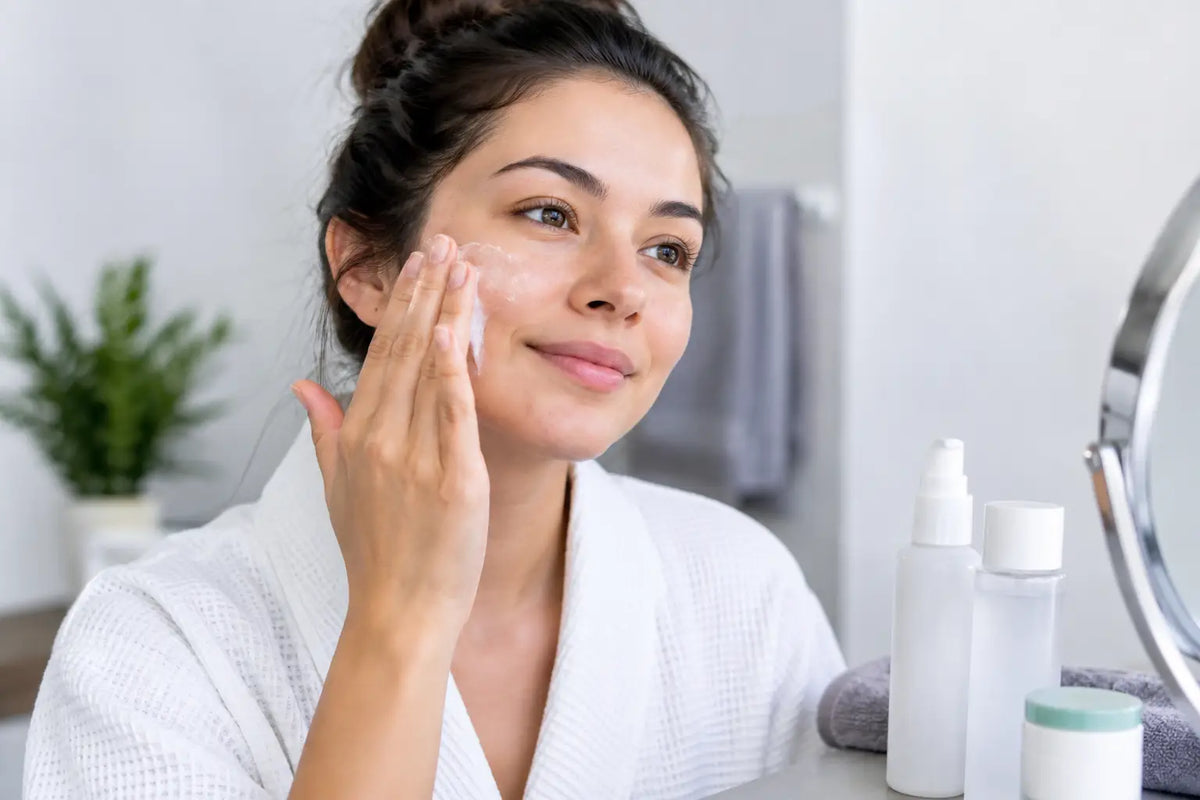
To reduce routine irritation, simplify the products touching your skin and introduce acne treatment at a pace your skin can tolerate. The hard part is that familiar drawer of half-used bottles: each one promised clearer pores or smoother-looking skin, but together they can leave your face tight, stingy, and still breaking out.
Routine irritation is not proof that you are failing at skincare, nor does it mean you need to scrub harder. Adult acne can persist alongside fine lines, uneven-looking texture, and post-acne marks. Trying to solve every concern with a separate treatment can turn a reasonable routine into too much contact, too often.
What does routine irritation look like?
Irritation often looks less dramatic than people expect. Your cleanser may sting where it never used to. A moisturizer can burn briefly on application. Skin may feel dry and taut, look flaky around the nose or mouth, or become red after washing. Breakouts can also seem harder to read because irritated skin can develop bumps that look like acne.
The cause is often cumulative. A medicated cleanser, an exfoliating toner, a scrub, a spot treatment, and a retinol product may each seem manageable alone. Used close together, they can exceed what your skin is comfortable with.
Salicylic acid is useful because it works in the pore, where oil and dead skin cells can contribute to blackheads, whiteheads, and other breakouts. The FDA recognizes salicylic acid from 0.5% to 2% for over-the-counter acne treatment. That does not mean every product containing it belongs in every step of your routine.
How to reduce routine irritation without giving up acne treatment
Start by removing the extras before assuming your acne treatment is the problem. For many people, the basic routine is a gentle cleanser, a moisturizer that feels comfortable on the skin, sunscreen during the day, and one focused acne treatment. Keep that routine steady long enough to understand what your skin is doing.
Put aside physical scrubs, peeling pads, strong masks, and leave-on exfoliants while you sort out the irritation. These products are not inherently bad. They are simply difficult to evaluate when your skin is already reacting. Fragrance can also be a factor for some people, especially in products used often or left on the skin.
Use lukewarm water and avoid rubbing with washcloths or cleansing brushes. Acne is not caused by poor hygiene. More washing does not clear pores faster, and friction can make already uncomfortable skin feel worse.
If your product label calls for regular use but your skin becomes persistently painful, very red, swollen, or develops a rash, stop using it and seek medical guidance. Hives, swelling around the eyes or lips, or trouble breathing need urgent medical care.
Can you use retinol and salicylic acid in the same routine?
It depends on the formula, your existing routine, and how your skin responds. Retinol is commonly used for the appearance of smoother, more even-looking skin, while salicylic acid is an FDA-recognized over-the-counter acne treatment. Both can be part of a routine, but stacking separate treatments casually is a common route to irritation.
A simpler approach is usually easier to live with than alternating a collection of strong products and hoping for the best. If you already use separate salicylic acid and retinol products, avoid changing everything at once. Pause the optional exfoliation first, then assess whether your core products feel comfortable.
The American Academy of Dermatology describes topical retinoids as an acne treatment option and emphasizes matching treatment to the type and severity of acne. Over-the-counter skincare has limits. It may help with mild breakouts and clogged pores, but it cannot diagnose a rash, identify an allergy, or manage every form of acne.
A calmer way to assess your routine
| If this is happening | Consider this adjustment |
| --- | --- |
| Skin stings during cleansing | Use a gentler cleanser and skip exfoliating tools |
| Flaking begins after adding products | Remove optional exfoliants and keep the routine simple |
| Breakouts and irritation blur together | Change one part of the routine at a time |
The goal is not to use the fewest products as a rule. It is to know what each product is doing and whether your skin is comfortable with it. Some people can use more treatment steps without trouble. Others get better consistency from a short routine with less overlap.
Why does a stripped-down routine help acne after thirty?
Acne after thirty can be especially frustrating because the usual teenage-acne advice often ignores everything else your skin is doing. You may be managing clogged pores on the chin while also noticing dry patches, fine lines, or makeup sitting differently than it used to. Adding another exfoliant can sound logical. It may also be exactly what creates the cycle of irritation.
A pared-back routine makes the signal clearer. If your skin feels calmer after removing extra treatments, you have learned something useful. If breakouts continue despite a consistent over-the-counter approach, the next step may be a dermatologist or other qualified clinician, not another random bottle.
Seek professional care for painful deep bumps, acne that is leaving persistent marks, a sudden major change in your skin, or breakouts that are affecting how you feel day to day. A parent concerned about a teenager's acne can also ask a clinician for guidance rather than guessing from a crowded shelf. If you are pregnant or breastfeeding, ask a doctor before using acne treatments.
What should a simple acne and skin-smoothing routine include?
Choose a routine that has a clear job for each step. Cleanse without making your skin feel stripped. Use an acne treatment according to its label. Moisturize if your skin feels dry or uncomfortable. Wear sunscreen in the daytime, especially if your routine includes ingredients that can make skin feel more reactive to sunlight.
This is where an all-in-one approach may make sense for someone tired of coordinating separate treatments. XVesuvius® is an FDA over-the-counter acne drug formulated with 2% salicylic acid and ingredients including encapsulated retinol, peptides, honey, ferments, and botanical extracts. It is one option for people who want a single step used morning and night rather than a lineup of overlapping products.
Keep the next step small: remove the product most likely to be extra, not essential, and give your skin a quieter routine. Clearer decisions usually begin there.


Share:
Acne Ingredient Guide for Adult Breakouts
Blackhead Treatment That Clears Without Scrubbing