





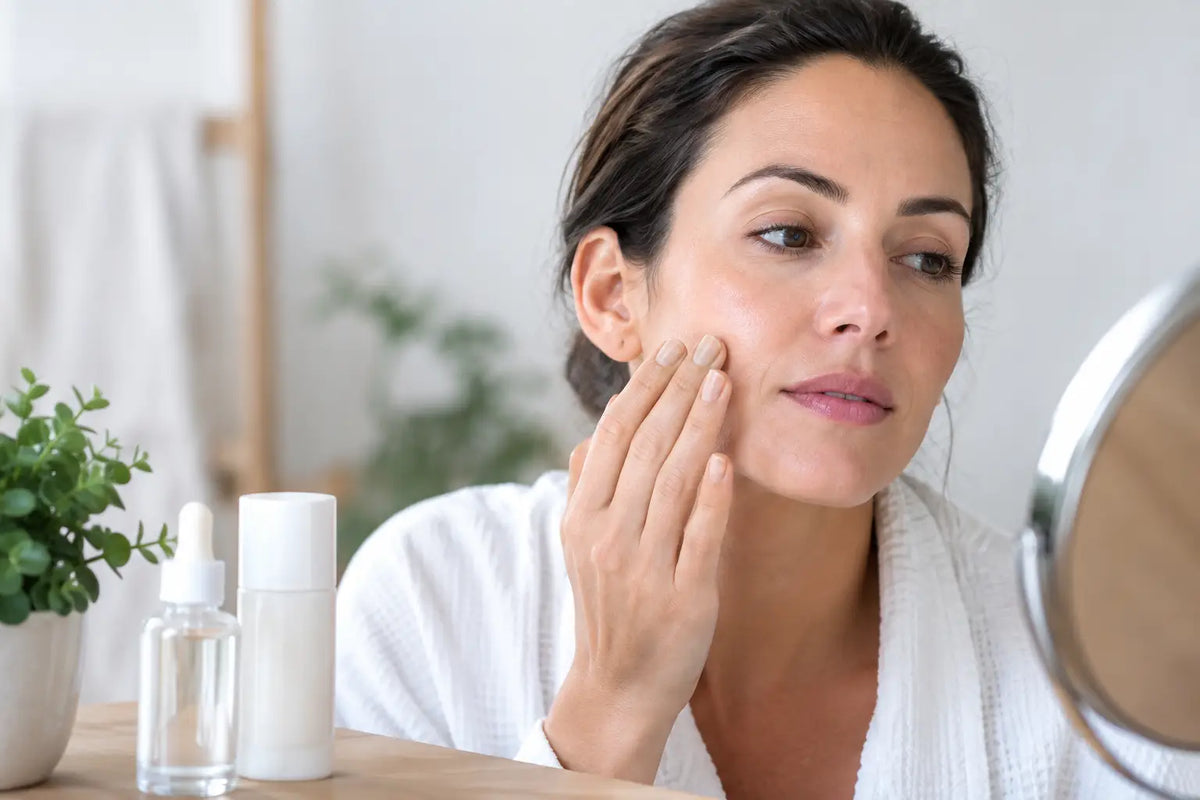
Yes, salicylic acid can dry skin, especially when you start using it, use too much, or combine it with other exfoliating treatments. If you have adult breakouts and fine lines, you may know the particular frustration of trying to clear clogged pores only to end up with skin that feels tight, rough, and somehow still breaks out.
Dryness does not mean you failed, and it does not automatically mean salicylic acid is wrong for you. It usually means your routine needs less friction and more consistency. The goal is clear-looking skin without turning your face into a testing ground for every bottle in the cabinet.
Why does salicylic acid dry skin?
Salicylic acid is a beta hydroxy acid used in FDA-recognized over-the-counter acne treatments. It is oil-soluble, which helps it work inside pores where oil and dead skin cells can collect. This is why it is often useful for blackheads, whiteheads, and the small, persistent clogged bumps that seem to appear along the chin or jawline.
The same process can leave the surface of the skin feeling dry. Salicylic acid helps loosen built-up dead skin cells and reduce the material that contributes to clogged pores. If your skin is already irritated, or if you layer several strong treatments in the same routine, that shedding can become noticeable as tightness, flaking, stinging, or redness.
The FDA monograph permits salicylic acid in an over-the-counter acne treatment at concentrations from 0.5% to 2%. A higher concentration within that permitted range is not automatically a better choice for every face. Formula, frequency, the rest of your routine, and your own skin all matter.
The American Academy of Dermatology also recognizes dryness and irritation as common concerns with acne treatment. Acne does not come from being unclean or insufficiently disciplined. Often, the instinct to scrub harder or add another exfoliant is what keeps the burn cycle going.
Does salicylic acid dry skin or cause a real reaction?
There is a useful difference between mild adjustment and a reaction that deserves a pause. A little dryness can happen as your skin gets used to a new acne treatment. Ongoing burning, swelling, itching, cracking, or a rash is different. Stop using the product and speak with a clinician if those symptoms occur.
Salicylic acid can also make an existing dry patch more obvious. You may have had a compromised outer skin layer from cold weather, harsh cleansing, frequent hot showers, shaving, or another topical treatment. Adding an exfoliating acne medication can make that area feel worse even while other areas of your face remain oily.
This is why a forehead that tolerates salicylic acid well does not necessarily mean your cheeks will. Acne routines are rarely one-size-fits-all, even when the product directions are simple.
How can you use salicylic acid without over-drying skin?
Start with the directions on the product label, then keep the rest of your routine quiet. Use a gentle cleanser, apply the acne treatment as directed, and use a plain moisturizer that feels comfortable on your skin. During the day, use sunscreen. That is not an elaborate routine. It is the basic support that lets an acne treatment do its job without needless competition.
Avoid introducing several new treatments at once. A new scrub, peel pad, retinoid, strong toner, and salicylic acid can all create irritation, but once they are layered together, it becomes nearly impossible to know which one is causing the problem.
A simple way to think about it is this:
| If your skin feels... | Consider this response |
|---|---|
| Slightly dry but comfortable | Keep the routine simple and use moisturizer consistently. |
| Tight, flaky, or stinging | Scale back other exfoliating products and reassess the product directions. |
| Swollen, intensely itchy, or rash-like | Stop use and seek medical guidance. |
Do not try to “push through” persistent discomfort because you assume acne treatment has to hurt. It does not. More irritation is not evidence that a product is working better.
Can you use salicylic acid and retinol together?
You can, but it depends on the formula and how your skin responds. Both ingredients can affect the way skin looks and feels, and combining separate products without a plan can lead to dryness. This is especially common for adults treating breakouts while also trying to improve the appearance of uneven texture and fine lines.
A peer-reviewed article in the Journal of Clinical and Aesthetic Dermatology describes how acne treatment plans often need to balance effectiveness with tolerability. That balance matters. The best routine is not the one with the most steps. It is the one you can use consistently without your skin becoming increasingly uncomfortable.
If you use a separate retinol product and a salicylic acid treatment, consider keeping their use from piling up in the same routine unless a clinician has advised otherwise. Read each label carefully. If you are pregnant, breastfeeding, or buying skincare for a child, ask a doctor before choosing a treatment plan.
What else may be making your skin dry?
Sometimes salicylic acid gets blamed for irritation created elsewhere. Foaming cleansers that leave your face squeaky, rough washcloths, face brushes, alcohol-heavy toners, and frequent exfoliating masks can all add to dryness. So can using a spot treatment across the entire face when it was meant only for a small area.
Weather and stress can change how your skin behaves, too. A routine that felt fine during a humid month may feel too harsh in a dry, heated room. Your skin is allowed to need different support at different times. That is not a sign that you are doing skincare wrong.
If you have persistent acne that is painful, deep, leaving post-acne marks, or not improving with over-the-counter care, a dermatologist can help identify what is going on. Conditions such as rosacea and eczema can resemble acne or coexist with it, and they need a different approach.
Is a single salicylic acid step enough for adult acne and aging concerns?
For many people, fewer steps are easier to use well. An FDA over-the-counter acne drug with 2% salicylic acid may be a practical foundation for clogged pores and breakouts, while the surrounding formula can matter for how comfortable the routine feels and how skin looks over time.
XVesuvius® is one option for readers who want a single morning-and-night step. It is an FDA over-the-counter acne drug formulated with 2% salicylic acid and Dermacetyl® complex, along with ingredients such as encapsulated retinol, peptides, honey, ferments, and botanical extracts. It is not a substitute for medical care when acne is persistent or severe, but it may make sense for someone tired of managing a drawer of half-used products.
Start by making the routine calmer, not more complicated. If salicylic acid leaves your skin dry, reduce the competing irritation, follow the label, moisturize, and give your skin room to settle.


Share:
How to Layer Acne Treatments Without Irritation
Understanding FDA OTC Acne Drug Facts Clearly