





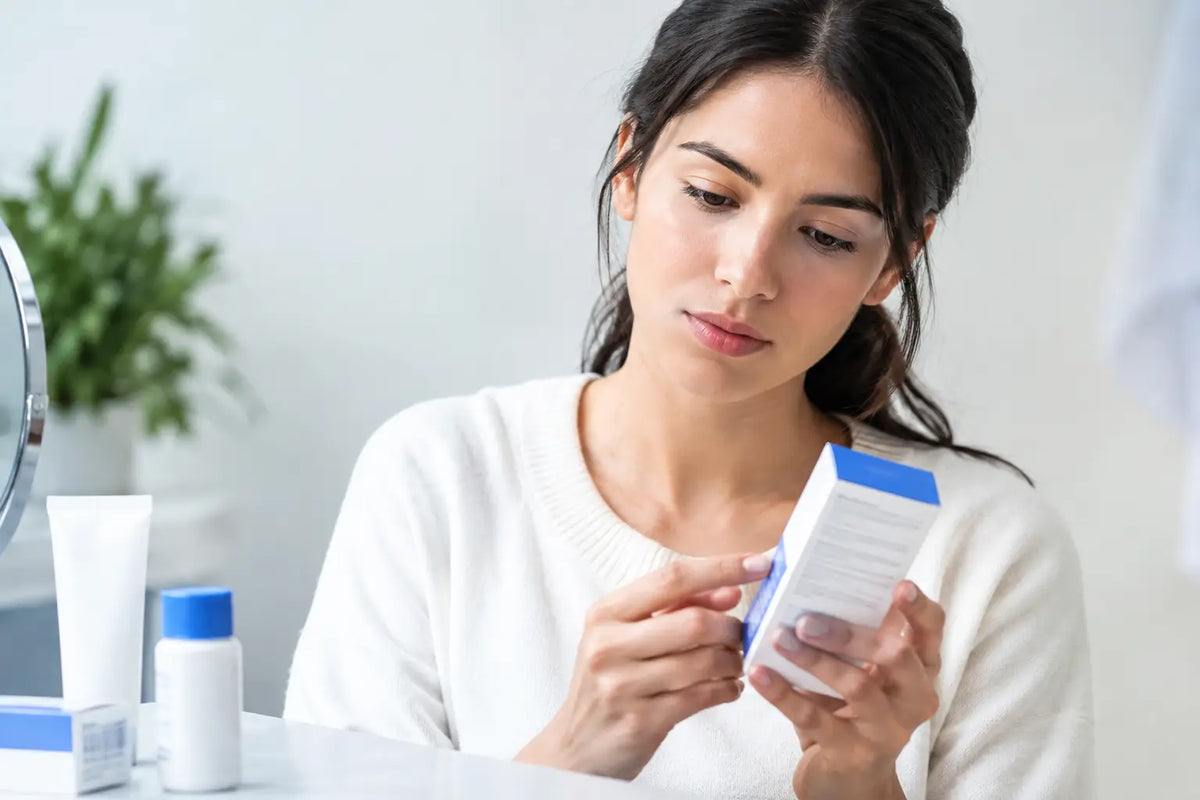
Understanding FDA OTC acne drug facts starts with this: the Drug Facts label tells you which ingredient is regulated to treat acne, while the rest of a formula may support how skin looks and feels. That distinction matters when your bathroom drawer is full of half-used bottles and you are still managing clogged pores alongside fine lines.
For adults with breakouts, good information is not a luxury. It is a way to stop buying products based on impressive-sounding ingredient lists, only to find out later that the claims were cosmetic, the routine was too harsh, or the product was never designed for the kind of acne they have.
What does understanding FDA OTC acne drug facts mean?
An FDA over-the-counter acne drug is regulated under an FDA OTC monograph. Think of the monograph as a public rulebook: it identifies permitted active ingredients, concentration ranges, directions, warnings, and the claims a product can make without a prescription.
For salicylic acid, the FDA monograph allows a range from 0.5% to 2%. Salicylic acid works inside the pore, helping loosen the buildup of oil and dead skin cells that can contribute to blackheads, whiteheads, and some pimples. It is especially relevant when skin feels congested rather than simply dry or uneven.
The Drug Facts panel is not marketing copy. It should identify the active ingredient and its purpose, then give directions and warnings. If a product calls itself an acne treatment but makes that information hard to find, pause before assuming it is regulated as an over-the-counter treatment.
The American Academy of Dermatology includes salicylic acid among common topical options for acne. It can be useful, but useful does not mean right for every breakout pattern or every skin routine. The cause and severity of acne still matter.
Which ingredients are regulated to treat acne, and which are cosmetic?
A formula can contain many ingredients, but not all of them are drug actives. This is where labels and advertising often blur together.
| What you see on a label | What it means |
|---|---|
| Active ingredient: salicylic acid | The regulated ingredient used to treat acne under the FDA OTC monograph. |
| Inactive ingredients | Ingredients that shape the product's texture, feel, stability, and cosmetic benefits. |
| Retinol, peptides, honey, ferments, botanical extracts | Cosmetic ingredients that may support the appearance of smoother, more even-looking skin. They are not the acne drug active. |
Retinol is a frequent source of confusion. It is widely used in cosmetic skin care for the appearance of fine lines and uneven texture, but it is not the same as a prescription retinoid. If you are considering retinol alongside salicylic acid, formulation and routine matter more than a blanket rule about whether the pair is good or bad.
A product can be formulated with both, yet skin may still need a gradual introduction if it has been irritated by past acne routines. Stinging, persistent burning, peeling, or a rash are not signs that you need to push through. They are reasons to stop and reassess.
Can you use salicylic acid and retinol together?
Yes, some people can use salicylic acid and retinol in the same routine, but it depends on the formula and how reactive their skin has become. The goal is not to collect more exfoliating steps. The goal is to use enough treatment to address clogged pores without creating an irritation cycle that makes every product feel like too much.
This is particularly relevant after acne treatments have left skin tight, flaky, or uncomfortable. A complicated routine can make it difficult to know what is helping and what is causing the problem. One well-formulated, consistent step is often easier to evaluate than several products layered together.
Follow the directions on the Drug Facts label. Avoid adding a separate exfoliant, scrub, or treatment serum simply because it sounds compatible on paper. If you are pregnant or breastfeeding, ask a doctor before using products with retinol or salicylic acid. Ask a doctor before choosing treatment for a child as well.
What can an FDA OTC acne drug realistically help with?
Salicylic acid can help treat acne that involves clogged pores, blackheads, whiteheads, and breakouts. It may be a sensible place to start for someone whose skin feels bumpy or congested, including adults who still get recurring chin or jawline breakouts.
It cannot answer every acne question. An over-the-counter option may not be enough for deep, painful bumps, widespread acne, acne that is leaving persistent marks, or breakouts that do not improve despite consistent use. Cystic and nodular acne need evaluation by a dermatologist. A dermatologist can also help distinguish acne from rosacea, eczema, or another skin condition that may look similar at first.
Adult acne also carries an emotional weight that teen-focused advice often misses. You may be managing work, family, changes in your skin's appearance, and the familiar frustration of a new blemish before an event. None of that means you caused your acne through poor hygiene, weak discipline, or a failure to find the right cleanser.
How should you read an acne treatment label before buying?
Start with the active ingredient, not the front-label promise. For an FDA over-the-counter acne drug, look for Drug Facts and confirm the active ingredient and concentration. A product with 2% salicylic acid is at the top of the FDA monograph range, but a higher concentration within the permitted range is not automatically better for every person.
Then read the directions and warnings with the same attention you give the ingredient list. They tell you how the product is intended to be used and when to stop. Marketing language may describe glow, smoothness, or a more even-looking complexion. Those are appearance claims, not evidence that every ingredient treats acne.
Finally, consider the routine around it. If you use a cleanser, treatment, exfoliant, retinol product, spot treatment, and heavy makeup remover, adding another serum can make the answer less clear. Fewer steps are not always better, but fewer overlapping treatments can make it easier to identify what your skin tolerates.
When should a parent seek help for a teenager's acne?
For a teenager, an FDA over-the-counter acne drug may be appropriate for ordinary breakouts and clogged pores when used according to its label. A parent should consider a dermatologist if acne is painful, widespread, causing distress, or not responding to consistent over-the-counter care. A clinician can help with treatment choices without turning skin care into a source of blame.
Keep the conversation practical. Ask what feels uncomfortable, whether products sting or burn, and whether acne is affecting school, activities, or confidence. Acne is common. It still deserves care when it is upsetting.
Where does one twice-daily step fit into an adult acne routine?
If your current routine feels crowded, start by identifying the acne treatment step you can use consistently and tolerate. XVesuvius® is an FDA over-the-counter acne drug formulated with 2% salicylic acid and cosmetic ingredients including encapsulated retinol, peptides, honey, ferments, and botanical extracts. It is one option for people who want a single twice-daily serum for acne care and skin that looks smoother and more even.
The calm next step is simple: read the Drug Facts label, choose a routine you can actually maintain, and get professional care when your acne is painful, persistent, or unclear.


Share:
Does Salicylic Acid Dry Skin? What Adults Need
Can Acne Products Cause Irritation? What to Do