





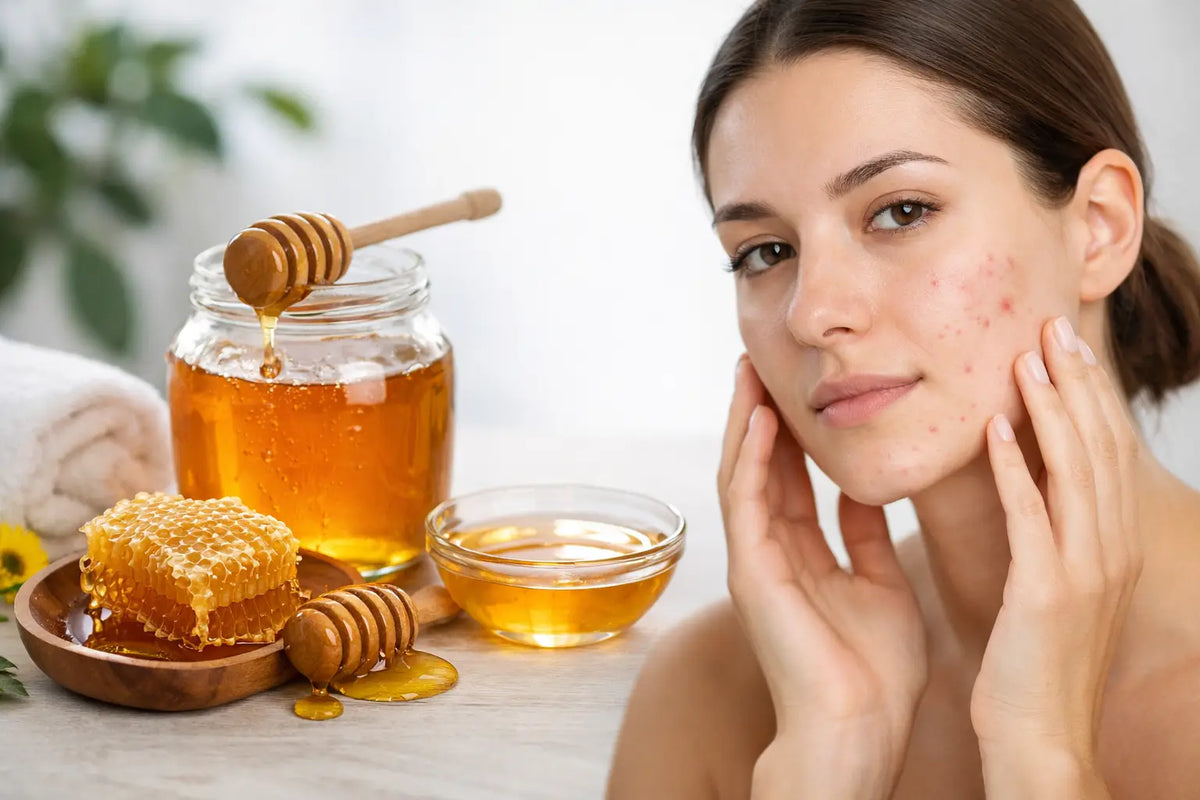
A sticky kitchen ingredient is not a complete acne treatment. Honey for acne gets attention because it can feel soothing on dry, inflamed skin, especially after a harsh routine has left your face tight, red, and reactive. But if your breakouts start with clogged pores, excess oil, and recurring bacteria-driven inflammation, honey alone will not clear the source.
That does not make honey useless. It means it needs the right role. Used thoughtfully, honey can support comfort and hydration. Used as a replacement for proven acne ingredients, it can keep you stuck in the cycle of temporary calm followed by the next wave of congestion.
What honey for acne can actually do
Honey is naturally rich in sugars and contains compounds that may support a moist, protective skin environment. Certain types, particularly medical-grade honey, have been studied for antimicrobial and wound-supportive properties. That matters when a blemish is irritated, picked, or healing.
On acne-prone skin, the practical benefits are usually more modest: honey may soften the feeling of dryness, reduce the urge to over-scrub, and make compromised skin feel more comfortable. When your barrier is stressed, any ingredient that helps skin feel less stripped can be useful.
The catch is that acne is not simply a surface bacteria problem. A breakout often begins below the surface, where dead skin cells and oil collect inside the pore. Inflammatory acne adds another layer: redness, swelling, and a disrupted barrier can make every treatment feel harsher. Honey does not reliably exfoliate inside pores or normalize the buildup that creates blackheads, whiteheads, and recurring blemishes.
Why a honey mask will not unclog pores
A honey mask can leave skin temporarily soft because it holds water at the surface. That is different from treating comedones. To keep pores clearer, you need an ingredient that can work through oil and help shed the buildup lining the pore.
Salicylic acid is built for that job. As a beta hydroxy acid, it is oil-soluble, which allows it to target pore congestion more directly than a rinse-off kitchen mask. It helps loosen dead skin cells, reduce the conditions that lead to clogged pores, and support fewer new breakouts over time.
Retinol can also be valuable for people dealing with uneven texture, post-acne marks, and ongoing congestion. It encourages skin renewal, but it can be irritating when introduced too quickly or paired with an already aggressive routine. This is where many acne routines fail: they stack strong actives, then mistake burning and peeling for progress.
Clear skin should not require a burn cycle. If your treatment leaves you flaky, painfully tight, or constantly red, your barrier may be paying the price. Barrier damage can make inflammation look worse, complicate consistency, and push you to stop treatment before it has time to work.
Raw honey versus skincare-grade honey
Not all honey belongs on your face. The honey in a pantry is food, not a standardized acne treatment. Its texture, purity, storage conditions, and concentration of active compounds can vary. It is also difficult to use cleanly, easy to overapply, and more likely to create a messy routine than a measurable result.
Medical-grade honey is processed and prepared for topical use under controlled standards. That is the type used in certain wound-care settings, not the same as a DIY mask. Even then, it should be viewed as a supportive ingredient rather than a primary answer for persistent acne.
A well-formulated skincare product can use honey alongside ingredients that solve different parts of the acne cycle. Humectants and soothing components can help reduce the dry, stripped feeling that makes people abandon acne treatment. Meanwhile, pore-clearing and skin-renewing ingredients can address active congestion and the visible aftermath of breakouts.
That combination matters more than chasing a single hero ingredient.
When honey may make sense in your routine
Honey can make sense when your skin is dry, sensitized, or recovering from over-treatment. If you use it, treat it as a short-contact comfort step, not a nightly cure. Apply a thin layer to clean skin, leave it on briefly, rinse thoroughly with lukewarm water, and follow with a non-comedogenic moisturizer.
Skip DIY honey masks on open, oozing, or infected-looking blemishes. Avoid them if you have a known allergy to honey, bee products, or pollen. And do not use a mask as an excuse to pick at a pimple first. Picking drives inflammation deeper, raises the risk of marks, and turns a small breakout into a longer recovery.
If your acne is cystic, painful, widespread, or leaving scars, a honey mask is not where to invest your hope. Persistent acne often needs a consistent clinical-strength topical routine and, in some cases, guidance from a dermatologist.
Build a routine that treats acne without the damage
The strongest routine is often the simplest one you can use consistently. You do not need a shelf full of spot treatments, exfoliating pads, drying toners, and separate products for marks. You need a formula that targets clogged pores while respecting the barrier.
Start with a gentle cleanse that removes sunscreen, oil, and daily buildup without leaving your skin squeaky-clean. Follow with a treatment designed for acne-prone skin, then use moisturizer and broad-spectrum sunscreen in the morning. Sunscreen is especially important if you are treating acne marks or using ingredients that increase skin sensitivity.
If you are adding salicylic acid or retinol separately, go slow. Start a few nights per week rather than forcing twice-daily use from day one. Watch for persistent stinging, rawness, cracking around the nose and mouth, or worsening flaking. Those are signals to simplify, not to push harder.
For people who want fewer steps, a balanced all-in-one approach can reduce the guesswork. XVolcano XVesuvius combines 2% salicylic acid with Dermacetyl®, a complex that includes antimicrobial peptides, retinol, honey, probiotic ferments, and Madagascar Dragon’s Blood. The goal is straightforward: fight pore congestion and visible breakouts while supporting the skin that harsh acne routines often leave behind.
The real test: fewer breakouts, calmer skin
Judge an acne product by more than the first morning after use. A mask can make skin feel smooth for a few hours. A true acne routine should help reduce the frequency of new blemishes, support clearer-looking pores, and make your skin feel more stable over several weeks.
Take photos in the same lighting once a week instead of inspecting every blemish in the mirror. Acne changes slowly, and daily checking can make normal fluctuations feel like failure. Give a well-tolerated routine time, but do not ignore a clear pattern of irritation.
Honey has a place in skincare when it supports hydration and recovery. It does not replace the pore-clearing, renewal-focused ingredients that help prevent the next breakout. Choose treatment that works below the surface, then give your skin enough support to keep using it consistently. That is how you move beyond short-lived soothing and toward clearer skin that stays calm.


Share:
Do Antimicrobial Peptides for Acne Work?
A Simple Acne Routine You Can Keep Using